

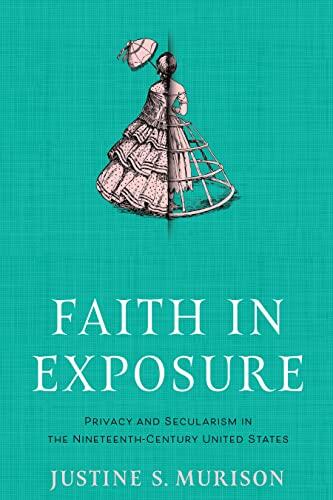
Faith in Exposure: Privacy and Secularism in the Nineteenth-Century United States
还没有评分
Science Fiction
Religion & Spirituality
History
格式
Kindle
页数
385
语言
英语
已发布
Jan 1, 2022
出版商
University of Pennsylvania Press
ISBN-10
151282352X
ISBN-13
9781512823523
描述
In a thought-provoking exploration of the interplay between faith and privacy during the tumultuous nineteenth century in the United States, Justine S. Murison delves into how the burgeoning ideals of secularism began to shape societal structures. Through her insightful analysis, she uncovers the tensions between personal belief systems and the increasing demand for public transparency.
Murison intricately examines how these themes influenced various aspects of life, from social norms to legal frameworks. The emergence of modernity and its accompanying challenges prompted individuals and groups to navigate their identities in a rapidly changing landscape. As the country grappled with issues of morality and governance, the concept of privacy took on new meanings, often at odds with deeply held religious convictions.
This work not only contextualizes historical developments but also invites contemporary readers to reflect on enduring questions about faith, autonomy, and the public sphere. By weaving together narrative and analysis, Murison presents a compelling case for understanding the complexities of privacy and secularism in shaping American identity. Through her research, she illustrates the profound impact that these elements have had on the cultural fabric of the nation.
Murison intricately examines how these themes influenced various aspects of life, from social norms to legal frameworks. The emergence of modernity and its accompanying challenges prompted individuals and groups to navigate their identities in a rapidly changing landscape. As the country grappled with issues of morality and governance, the concept of privacy took on new meanings, often at odds with deeply held religious convictions.
This work not only contextualizes historical developments but also invites contemporary readers to reflect on enduring questions about faith, autonomy, and the public sphere. By weaving together narrative and analysis, Murison presents a compelling case for understanding the complexities of privacy and secularism in shaping American identity. Through her research, she illustrates the profound impact that these elements have had on the cultural fabric of the nation.