

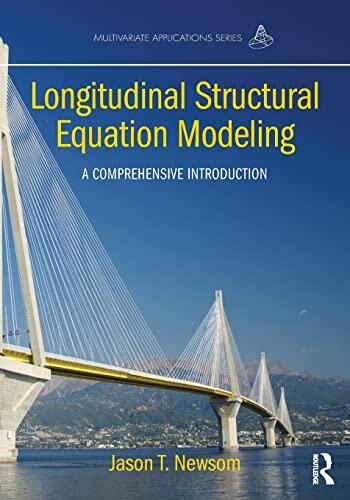
Longitudinal Structural Equation Modeling: A Comprehensive Introduction
还没有评分
Health & Wellness
格式
平装书
页数
412
语言
英语
已发布
Jun 18, 2015
出版商
Routledge
版本
1
ISBN-10
184872697X
ISBN-13
9781848726970
描述
This book serves as a thorough guide for those interested in the field of longitudinal structural equation modeling (LSEM). The author, Jason T. Newsom, delves into the intricacies of multivariate applications, expertly bridging the gap between theory and practical implementation. With a strong focus on methodological advancements, the text offers readers a robust framework for understanding complex relationships over time.
Newsom's work is not only informative but also accessible, making it suitable for both novices and experienced researchers. He provides clear explanations of key concepts, allowing readers to grasp the underlying principles of LSEM. The comprehensive nature of the book ensures that readers can apply these techniques in real-world research scenarios, enhancing their analytical capabilities.
Throughout the chapters, the author emphasizes the importance of data management and the application of statistical software, equipping readers with the skills needed to conduct their own analyses. This invaluable resource fosters a deeper understanding of longitudinal studies, empowering researchers to draw meaningful conclusions from their data.
Newsom's work is not only informative but also accessible, making it suitable for both novices and experienced researchers. He provides clear explanations of key concepts, allowing readers to grasp the underlying principles of LSEM. The comprehensive nature of the book ensures that readers can apply these techniques in real-world research scenarios, enhancing their analytical capabilities.
Throughout the chapters, the author emphasizes the importance of data management and the application of statistical software, equipping readers with the skills needed to conduct their own analyses. This invaluable resource fosters a deeper understanding of longitudinal studies, empowering researchers to draw meaningful conclusions from their data.