

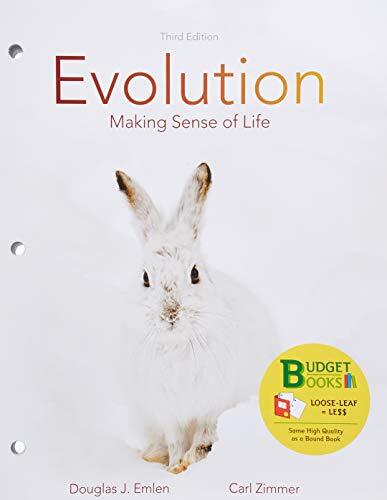
书籍详情
格式
平装书
页数
782
语言
英语
已发布
Nov 1, 2019
出版商
W. H. Freeman
版本
Third
ISBN-10
131934013X
ISBN-13
9781319340131
描述
In a world that constantly evolves, the exploration of evolutionary biology becomes ever more pertinent. Two renowned authors, Douglas J. Emlen and Carl Zimmer, delve into the intricacies of evolution with a focus on its mechanisms and impacts on the living world. Their collaborative work offers readers a comprehensive approach to understanding the multifaceted processes that drive biological change.
Through engaging narratives and vivid illustrations, the authors illuminate principles such as natural selection, genetic variation, and the interplay of ecological factors. With a commitment to clarity, the content is both accessible to newcomers and rich enough for seasoned scholars. Their grounded explanations are accompanied by thought-provoking examples that reflect the diversity of life on Earth.
Furthermore, the accompanying resources enhance the learning experience, providing interactive opportunities for readers to grasp complex concepts. This integration of traditional texts with modern tools exemplifies a progressive approach to education in the field of evolution.
Emlen and Zimmer's work stands as a testament to the dynamic nature of biology and the ongoing relationship between humans and the environment. Their insights encourage readers to appreciate the ever-changing tapestry of life, urging them to ponder how evolutionary principles shape not only the past but also the future of all organisms.
Through engaging narratives and vivid illustrations, the authors illuminate principles such as natural selection, genetic variation, and the interplay of ecological factors. With a commitment to clarity, the content is both accessible to newcomers and rich enough for seasoned scholars. Their grounded explanations are accompanied by thought-provoking examples that reflect the diversity of life on Earth.
Furthermore, the accompanying resources enhance the learning experience, providing interactive opportunities for readers to grasp complex concepts. This integration of traditional texts with modern tools exemplifies a progressive approach to education in the field of evolution.
Emlen and Zimmer's work stands as a testament to the dynamic nature of biology and the ongoing relationship between humans and the environment. Their insights encourage readers to appreciate the ever-changing tapestry of life, urging them to ponder how evolutionary principles shape not only the past but also the future of all organisms.