

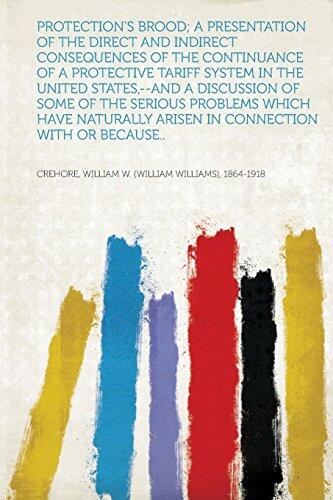
Protection's Brood; a Presentation of the Direct and Indirect Consequences of the Continuance of a Protective Tariff System in the United States,--And ... Arisen in Connection With or Because..
由
Crehore William W. (William 1864-1918
还没有评分
格式
平装书
页数
266
语言
英语
已发布
Jan 28, 2013
出版商
Hardpress Publishing
ISBN-10
1313782378
ISBN-13
9781313782371
描述
William W. Crehore delves into the complexities of the protective tariff system in the United States, examining its sweeping implications on both the economy and society. With a critical eye, he unpacks the various dimensions of this policy, revealing the balance between safeguarding domestic industries and the potential ripple effects on consumers and international trade.
Throughout the narrative, Crehore explores the historical context that has shaped protective tariffs, offering insights into their origins and evolution. He presents a thorough analysis of how protectionism affects not only trade practices but also the livelihoods of individuals and communities across the nation.
The work captures the contentious debates surrounding protectionism, weighing the benefits against the drawbacks. Crehore's exploration leads readers to consider the broader repercussions of implementing such economic policies, ultimately questioning whether the perceived advantages justify the potential costs.
In a time when economic strategies profoundly influence national prosperity, Crehore's presentation serves as a poignant reminder of the interconnectedness of policy decisions and their far-reaching consequences.
Throughout the narrative, Crehore explores the historical context that has shaped protective tariffs, offering insights into their origins and evolution. He presents a thorough analysis of how protectionism affects not only trade practices but also the livelihoods of individuals and communities across the nation.
The work captures the contentious debates surrounding protectionism, weighing the benefits against the drawbacks. Crehore's exploration leads readers to consider the broader repercussions of implementing such economic policies, ultimately questioning whether the perceived advantages justify the potential costs.
In a time when economic strategies profoundly influence national prosperity, Crehore's presentation serves as a poignant reminder of the interconnectedness of policy decisions and their far-reaching consequences.