

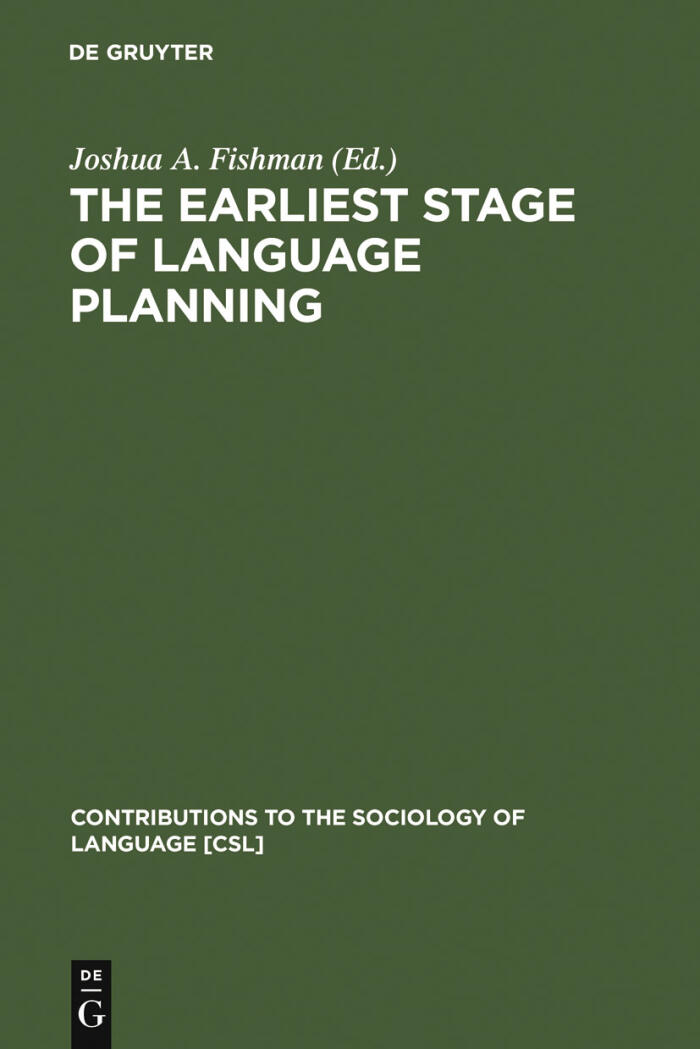
The Earliest Stage of Language Planning: "The First Congress" Phenomenon
还没有评分
格式
Kindle
页数
359
语言
英语
已发布
Jan 1, 2011
出版商
De Gruyter Mouton
版本
1
ISBN-10
3110848988
ISBN-13
9783110848984
描述
Joshua A. Fishman delves into the intricate world of language planning in his exploration of a pivotal event known as "The First Congress." This phenomenon serves as a lens to understand the earliest stages of organized efforts to shape language policies and practices within communities. Fishman examines historical contexts and the sociolinguistic factors that led to the emergence of language planning, highlighting its crucial role in societal developments.
Through meticulous analysis, Fishman illustrates how communities grappled with their linguistic heritage and identity at a crucial time. The narrative not only sheds light on the interplay between language and society but also emphasizes the importance of proactive measures in maintaining linguistic diversity. His research invites readers to reconsider the implications of language planning, particularly in an era of globalization where languages face unprecedented challenges.
Overall, this work serves as a significant contribution to the sociology of language, offering insights that resonate with linguists, sociologists, and policymakers alike. Fishman's thoughtful exploration encourages reflection on the ongoing evolution of language and its powerful impact on cultural identity.
Through meticulous analysis, Fishman illustrates how communities grappled with their linguistic heritage and identity at a crucial time. The narrative not only sheds light on the interplay between language and society but also emphasizes the importance of proactive measures in maintaining linguistic diversity. His research invites readers to reconsider the implications of language planning, particularly in an era of globalization where languages face unprecedented challenges.
Overall, this work serves as a significant contribution to the sociology of language, offering insights that resonate with linguists, sociologists, and policymakers alike. Fishman's thoughtful exploration encourages reflection on the ongoing evolution of language and its powerful impact on cultural identity.