

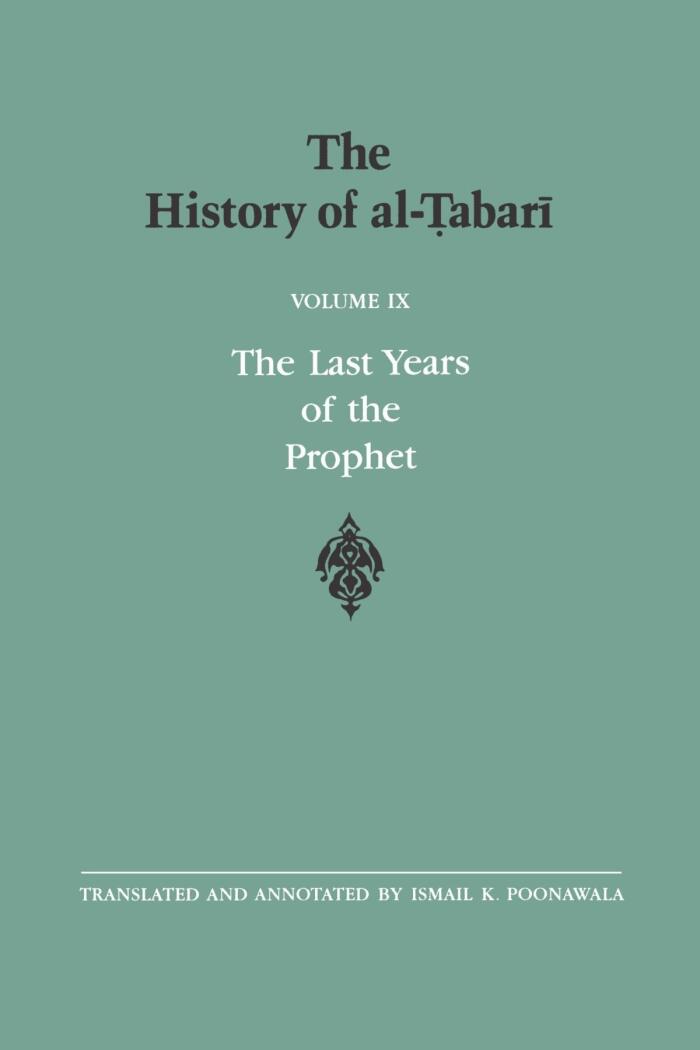
The History of al-Tabari Vol. 9: The Last Years of the Prophet: The Formation of the State A.D. 630-632/A.H. 8-11: v. 9 (SUNY series in Near Eastern Studies) by Ismail K. Poonawala (Translator) (11-Sep-1990) Paperback
还没有评分
格式
平装书
语言
英语
出版商
State University of New York Press (11 Sept. 1990)
描述
In this detailed account, the final chapters of the Prophet Muhammad’s life are explored with profound insights into the critical moments that defined the early Islamic state. The narrative captures the nuances of his leadership and the strategic decisions that laid the foundation for what would become a powerful community. Through meticulous translations, the reader is invited to delve into the complexities surrounding the Prophet’s final years.
As the community began to expand, the text brings forth the multifaceted challenges faced, both internally and externally. Al-Tabari's work highlights the richness of the historical context, showcasing the dynamics of early Islamic society and governance. Poonawala's translation illuminates the subtleties of the original Arabic, making the themes accessible and engaging for contemporary readers.
This scholarly edition not only preserves the elegance of Al-Tabari’s writing but also contributes to the ongoing discourse surrounding the evolution of Islamic thought. It serves as both a historical document and a reflection of the socio-political climate of the time, encouraging readers to reflect on the lasting legacy of the Prophet’s vision for unity and statehood.
As the community began to expand, the text brings forth the multifaceted challenges faced, both internally and externally. Al-Tabari's work highlights the richness of the historical context, showcasing the dynamics of early Islamic society and governance. Poonawala's translation illuminates the subtleties of the original Arabic, making the themes accessible and engaging for contemporary readers.
This scholarly edition not only preserves the elegance of Al-Tabari’s writing but also contributes to the ongoing discourse surrounding the evolution of Islamic thought. It serves as both a historical document and a reflection of the socio-political climate of the time, encouraging readers to reflect on the lasting legacy of the Prophet’s vision for unity and statehood.