

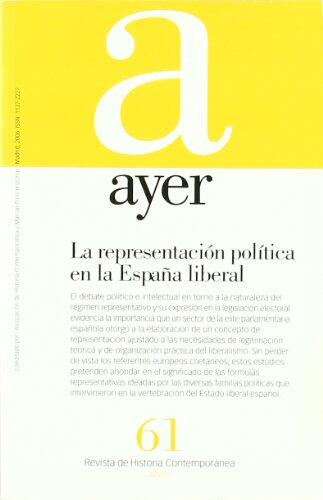
REPRESENTACIÓN POLÍTICA EN LA ESPAÑA LIBERAL, LA: Ayer 61
尚無評分
格式
平裝書
頁數
336
語言
西班牙的
已出版
Apr 28, 2006
出版商
Marcial Pons Ediciones de Historia, S.A.
ISBN-10
8496467279
ISBN-13
9788496467279
描述
In this compelling exploration of political representation during Spain's liberal era, María Sierra and M Antonia Peña delve into the intricate dynamics that shaped the nation’s governance. They provide readers with insightful analyses that draw upon historical narratives and contemporary implications of political structures. The authors set the stage by examining the evolution of political representation, highlighting pivotal events and ideologies that influenced the development of liberalism in Spain.
The book navigates through the complex relationship between the citizens and their government, shedding light on how different political factions and movements contributed to the broader discourse of representation. By addressing the historical context and the social movements that arose during this period, the authors illustrate the ongoing struggle for democracy and the right to be represented, making connections to modern-day political debates.
Throughout the narrative, Sierra and Peña emphasize the importance of understanding Spain's political heritage in shaping its current democratic practices. Their comprehensive approach not only enlightens readers about historical events but also provokes thought about the role of representation in contemporary governance, inviting reflection on the lessons learned from the past.
The book navigates through the complex relationship between the citizens and their government, shedding light on how different political factions and movements contributed to the broader discourse of representation. By addressing the historical context and the social movements that arose during this period, the authors illustrate the ongoing struggle for democracy and the right to be represented, making connections to modern-day political debates.
Throughout the narrative, Sierra and Peña emphasize the importance of understanding Spain's political heritage in shaping its current democratic practices. Their comprehensive approach not only enlightens readers about historical events but also provokes thought about the role of representation in contemporary governance, inviting reflection on the lessons learned from the past.