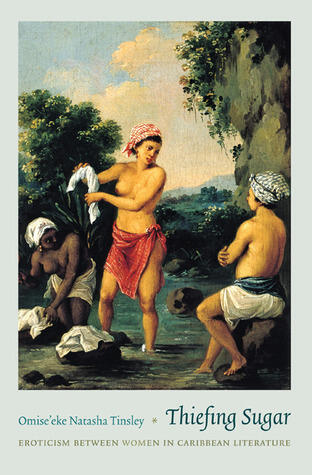
Thiefing Sugar: Eroticism between Women in Caribbean Literature
尚無評分
History
LGBTQ+
Poetry
+2
more
格式
平裝書
頁數
288
語言
英語
已出版
Aug 18, 2010
出版商
Duke University Press Books
ISBN-10
0822347776
ISBN-13
9780822347774
描述
In a captivating exploration of Caribbean literature, Omise’eke Natasha Tinsley delves deep into the rich reservoir of poetry and prose crafted by women writers from the region. This work presents an intricate tapestry of eroticism, unveiling the complexities of desire and identity through a feminine lens. Blending literary analysis with cultural critique, the narrative unveils how these authors challenge and reconfigure established norms surrounding sexuality, femininity, and power dynamics.
Tinsley's examination reveals the unique voices of Caribbean women, highlighting their contributions to a literary landscape that often marginalizes their experiences. The interplay of language, culture, and the erotic serves as a powerful tool for resistance and self-affirmation. By dissecting the nuances of these texts, readers are invited to understand the broader implications of love and longing in the context of post-colonial Caribbean society.
Through the collaboration with notable scholars like J. Jack Halberstam and Lisa Lowe, the work fosters a dialogue about race, gender, and sexuality that resonates far beyond the Caribbean. By bringing together diverse perspectives, this exploration not only enriches the canon of Caribbean literature but also speaks to universal themes of desire, agency, and the quest for belonging.
Tinsley's examination reveals the unique voices of Caribbean women, highlighting their contributions to a literary landscape that often marginalizes their experiences. The interplay of language, culture, and the erotic serves as a powerful tool for resistance and self-affirmation. By dissecting the nuances of these texts, readers are invited to understand the broader implications of love and longing in the context of post-colonial Caribbean society.
Through the collaboration with notable scholars like J. Jack Halberstam and Lisa Lowe, the work fosters a dialogue about race, gender, and sexuality that resonates far beyond the Caribbean. By bringing together diverse perspectives, this exploration not only enriches the canon of Caribbean literature but also speaks to universal themes of desire, agency, and the quest for belonging.