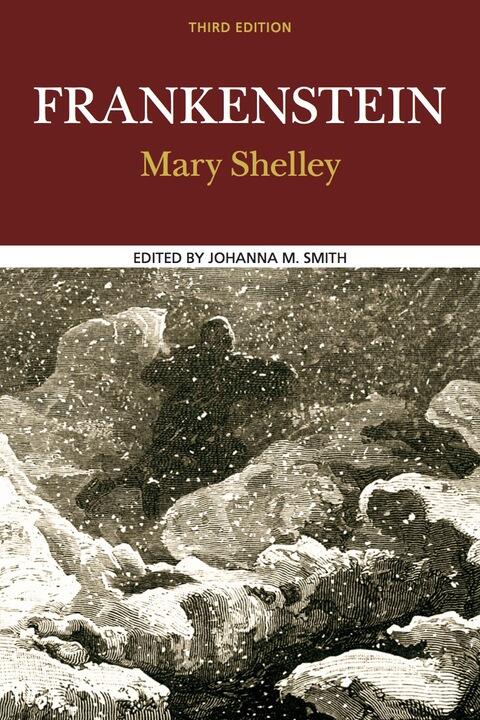
Frankenstein: A Case Study in Contemporary Criticism

Frankenstein: A Case Study in Contemporary Criticism

Aún sin calificaciones
Jan 1, 2015 · Inglés · Kindle (608 páginas)
Añadir a la estantería

Califica este libro


Exportar diario de lectura

Detalles del libro

Formato Kindle
Páginas 608
Idioma Inglés
Publicado Jan 1, 2015
Editorial Bedford/St. Martin's
Edición 3
ISBN-10 1319035841
ISBN-13 9781319035846

Descripción

In this peer-reviewed examination of Mary Shelley's classic, Johanna M. Smith offers a modern lens through which to view "Frankenstein," diving deep into its themes, characters, and societal implications. Drawing from trends in contemporary literary criticism, Smith revisits the motivations and moral dilemmas faced by both Victor Frankenstein and his creation. The analysis presents not only a historical context but also highlights how these dilemmas resonate in today's world, exploring issues like identity, responsibility, and the essence of humanity.

This latest edition enriches the dialogue surrounding Shelley's work, incorporating diverse scholarly perspectives introduced in recent years. By engaging with feminist, postcolonial, and psychoanalytic critiques, Smith broadens the scope of interpretation, making it an essential read for those seeking to understand the enduring relevance of "Frankenstein." Through this modern critique, readers are invited to reflect on the complexities of creation and the consequences of ambition, echoing discussions that are just as vital today as they were in the 19th century.

Géneros

Romance Misterio Ciencia Ficción Suspenso y Thriller Jóvenes Adultos Infantil Biografía Acción y Aventura Autoayuda Religión y Espiritualidad Ciencia y Tecnología Historia Terror Negocios y Economía Filosofía Fantasía Manga Novelas Gráficas Poesía Libros de Cocina Viajes Salud y Bienestar Arte y Fotografía Crimen Clásicos Contemporáneo Paranormal Política Naturaleza Psicología

Reseñas

Ver todo

Mary Shelley's chilling Gothic tale was conceived when she was only eighteen, living with her lover Percy Shelley on Lake Geneva.

June 15th 2026

El libro plantea temas profundos como la ética científica, que tan lejos es capaz de llegar el ser humano con tal de conseguir sus objetivos, lo inhumanos que podemos llegar a ser, la vida, la muerte y la naturaleza humana.En cuanto a Victor Frankenstein, era un joven algo egocentrico que jugo a ser Dios y cuando le da vida al monstruo, simplemente huye. Personalmente considero que el monstruo era muchísimo más humano que su creador, pero el rechazo y aislamiento que sufre por parte del mundo lo llevan a llenarse de odio. Lo otro que me sorprende es cómo el mounstruo es capaz de aprender a hablar, a expresarse y a leer sin que nadie le enseñara,Me sorprendió lo diferente que es la novela en comparación con las películas o dibujos animados (es demasiada la diferencia) y éstas no le hacen honra a esta obra maestra. Me gustó la escritura de Mary Shelley por su fluidez, riqueza de palabras, llena de matices fantasticos entremezclados con la realidad y antiguedad, que le da un toque apasionado.En resumen, el libro me encantó y pasó a mis favoritos, por lo que lo recomiendo a todos las personas que quieran iniciarse en el terror, en la ciencia ficcion o simplemente en la lectura. Puntuación: 5/5

February 27th 2026

Everyone knows Frankenstein and his creature; even those who had never read the novel. Such is the influence and power of this immortal classic! But what of the circumstances which had led to its writing in the first place? These are just as interesting as the novel itself!It all began, in fact, in 1815: The year without a summer. On account of a volcanic eruption in Mount Tamboro in Indonesia, tremendous clouds of volcanic ash glided upward into the atmosphere. Thus, for long months the sun was obscured, the temperatures decreased, the rain fell in torrents, and there had been disastrous crop failures in Europe, North America, and Asia. When Mary and Percy Shelley were travelling to Geneva on the following year, such was the state of nature which had greeted them in a gloomy veil. The awe-inspiring scenery made an everlasting impression upon Mary, and would later find its parallel in the setting of Frankenstein. In Geneva, the young couple were joined by Lord Byron and William Polidori. Mary's son and step-sister were also of the party. The small group were often confined indoors on account of the rain. But such a set of brilliant minds were not at a loss to find amusement. On one occasion, Lord Byron had suggested the writing of ghost tales as a pass time to his companions when a German collection of the same genre, entitled Fantasmagorina, had caught their fancy. For a time, the atmosphere at the villa was electrified. Lord Byron and Claire Clairmont led a one-sided relationship which bordered on frustration and unrequited love. Polidori was growing more enamored with Mary by the hour, and although she did not reciprocate his feelings, the situation drove Percy mad. The latter was intent upon galvanism and discussions about the secret of life and death. In this strange and intense mixture of emotions and incentives, Frankenstein was born in a dream. It had tortured its authoress one night with uncanny visions that gave her the main ideas of the novel and the need to write it down. Thus, Victor and his creature had come to life; an odd pair, for the man is a monster, and the monster is more human than most men. Abandonment, love, hatred, anger, jealousy, desperation, faith, rage; there is no end to the emotions which Mary had imbedded so beautifully in her work. The book is not idle amusement though it is very amusing. In its pages, you learn painful truths about yourself, about life, and about the rest of Mankind

February 17th 2026
Añadir a la estantería

Califica este libro


Exportar diario de lectura