

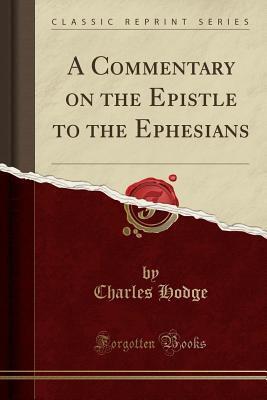
Description
Excerpt from A Commentary on the Epistle to the Ephesians
The city of Ephesus, under the Romans, the capital of Proconsular Asia, was situated on a plain near the mouth of the river Cayster. It was originally a Greek colony, but became in no small degree orientalized by the influences which surrounded it. Being a free city, it enjoyed under the Romans to a great extent the right of self-government. Its constitution was essentially democratic. The municipal authority was vested in a Senate, and in the Assembly of the people. It was by his remonstrance the tumultuous assembly of which mention is made in Acts 19, 24 - 40, was induced to disperse.
The city was principally celebrated for its temple of Diana. From the earliest period of its history, Ephesus was regarded as sacred to that goddess. The attributes belonging to the Grecian Diana, however, seem to have been combined with those which belonged to the Ph nician Astarte. Her image, as revered in Ephesus, was not a product of Grecian Art, but a many-breasted, mummy-like figure of oriental symbolism. Her famous Temple was, however, a Greek building of the Ionic order.
About the Publisher
Forgotten Books publishes hundreds of thousands of rare and classic books. Find more at www.forgottenbooks.com
This book is a reproduction of an important historical work. Forgotten Books uses state-of-the-art technology to digitally reconstruct the work, preserving the original format whilst repairing imperfections present in the aged copy. In rare cases, an imperfection in the original, such as a blemish or missing page, may be replicated in our edition. We do, however, repair the vast majority of imperfections successfully; any imperfections that remain are intentionally left to preserve the state of such historical works."
Book Details
Format
Paperback
Pages
402 pages
Language
English
Published
Aug 24, 2018
Publisher
Forgotten Books
Editions
38 editions
ISBN-10
1331362393
ISBN-13
9781331362395