

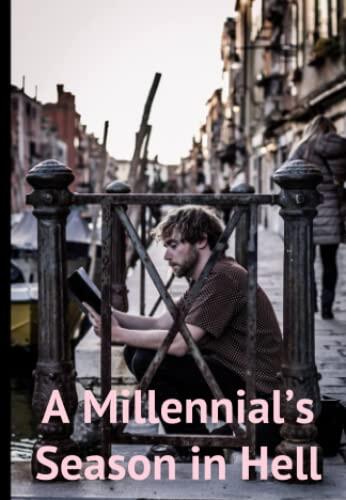
Description
What’s an embellished translation? I define an embellished translation not as a direct, objective translation of a work from one language to another, but as an indirect, subjective translation of a work into one’s own words. The content and form of the embellished translation can adhere closely, run parallel, or become completely non sequitur from the original work. But the foundation of the analogous new work comes from the form, style, mood, ideas, etc. of the original work.
The Patron Poet of Rebels, Idealists, & Decadents Arthur Rimbaud was a subculture of one. He ran away from home. He joined a revolution. He did every drug he could find. He had queer relationships. He peed on rivals’ poetry in front of them. He broke conventions after learning them all. He was a visionary in style and altered states of consciousness. He lived inside his delusions of grandeur and believed in magic. But after getting shot in the hand by his fellow poet and lover Paul Verlaine and finding no literary he abandoned literature at 20. He eventually became a trader in Africa, with the desire to become bourgeois and rich, but failed at that too, and died relatively young. He became a promethean saint to the Symbolists, the Decadents, & the Surrealists, to Bob Dylan, Jim Morrison, & Patti Smith, and to me & many other avant-garde and Romantic-inclined writers who have dreamed of escaping reality by words, adventure, or some mystic power—only to drink the dregs of bitterness when our disillusionment catches up. Rimbaud’s A Season in Hell was his farewell to literature, while my embellished translation ushers in a new form of literature. Both are filled with manic enthusiasm and corrosive rage. A thousand ideals burn inside each, each another potential failure. We dream of that other life that resembles the complete opposite of hell, but not heaven—something more wondrous, and even more intangible. It’s felt in moments, especially spent writing, when the exhilaration of an idea washes over us and it’s as if we are actually there in our fantasy. Before it evaporates, and we strive onwards—even towards utter defeat.
The Patron Poet of Rebels, Idealists, & Decadents Arthur Rimbaud was a subculture of one. He ran away from home. He joined a revolution. He did every drug he could find. He had queer relationships. He peed on rivals’ poetry in front of them. He broke conventions after learning them all. He was a visionary in style and altered states of consciousness. He lived inside his delusions of grandeur and believed in magic. But after getting shot in the hand by his fellow poet and lover Paul Verlaine and finding no literary he abandoned literature at 20. He eventually became a trader in Africa, with the desire to become bourgeois and rich, but failed at that too, and died relatively young. He became a promethean saint to the Symbolists, the Decadents, & the Surrealists, to Bob Dylan, Jim Morrison, & Patti Smith, and to me & many other avant-garde and Romantic-inclined writers who have dreamed of escaping reality by words, adventure, or some mystic power—only to drink the dregs of bitterness when our disillusionment catches up. Rimbaud’s A Season in Hell was his farewell to literature, while my embellished translation ushers in a new form of literature. Both are filled with manic enthusiasm and corrosive rage. A thousand ideals burn inside each, each another potential failure. We dream of that other life that resembles the complete opposite of hell, but not heaven—something more wondrous, and even more intangible. It’s felt in moments, especially spent writing, when the exhilaration of an idea washes over us and it’s as if we are actually there in our fantasy. Before it evaporates, and we strive onwards—even towards utter defeat.
Book Details
Format
Paperback
Pages
60 pages
Language
English
Published
Mar 11, 2023
Publisher
Independently published
ISBN-13
9798386715373