

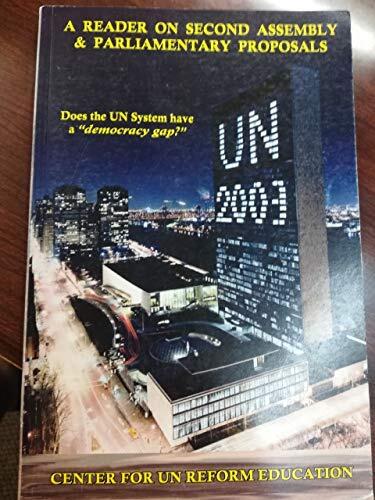
Description
The work delves into the nuanced relationship between democratic ideals and the operations of the United Nations system. Through a series of insightful analyses, the authors explore the notion of a "democracy gap," questioning whether the UN effectively embodies the principles of democracy that it promotes globally.
Medlovitz and Walker draw on historical contexts and contemporary case studies to illustrate how the UN’s structures and processes can sometimes undermine the very democratic values they are meant to uphold. They highlight various parliamentary proposals and initiatives that aim to bridge this gap, shedding light on the ongoing debates surrounding democratic accountability within international organizations.
Readers will find a rich tapestry of ideas that challenge conventional wisdom about the UN's role in global governance. The exploration of second assembly proposals emphasizes the importance of inclusivity and representation in fostering genuinely democratic systems.
As the authors navigate complex political landscapes, they invite readers to reflect on potential reforms that could enhance the democratic legitimacy of the UN, fostering a deeper understanding of its influence on global citizenship and governance.
Medlovitz and Walker draw on historical contexts and contemporary case studies to illustrate how the UN’s structures and processes can sometimes undermine the very democratic values they are meant to uphold. They highlight various parliamentary proposals and initiatives that aim to bridge this gap, shedding light on the ongoing debates surrounding democratic accountability within international organizations.
Readers will find a rich tapestry of ideas that challenge conventional wisdom about the UN's role in global governance. The exploration of second assembly proposals emphasizes the importance of inclusivity and representation in fostering genuinely democratic systems.
As the authors navigate complex political landscapes, they invite readers to reflect on potential reforms that could enhance the democratic legitimacy of the UN, fostering a deeper understanding of its influence on global citizenship and governance.
Book Details
Format
Paperback
Pages
151 pages
Language
English
Published
Jan 1, 2003
Publisher
Center for UN Reform Education
ISBN-10
1881520153
ISBN-13
9781881520153