Description
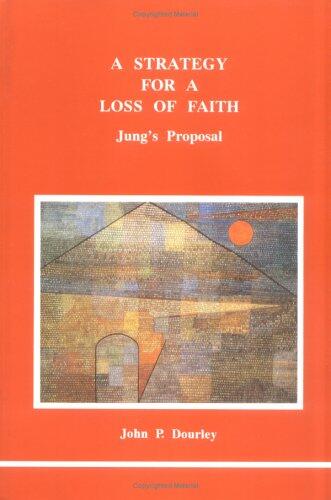
John P. Dourley's exploration delves into the interplay between psychology and spirituality, particularly in the context of faith and its absence. He draws on the profound insights of Carl Jung to outline a path for individuals grappling with a loss of faith. Through a careful analysis of Jungian concepts, Dourley presents a framework that encourages readers to confront their existential dilemmas.
The work posits that losing faith can lead to a fertile ground for personal transformation rather than a mere descent into despair. Dourley emphasizes the importance of embracing the inner journey, inviting readers to navigate their psychological landscapes. He discusses how these journeys can illuminate pathways toward deeper self-awareness and understanding.
Central to the discussion is the notion of psychological resilience, suggesting that those who challenge their beliefs can develop a richer, more authentic sense of self. Dourley's approach is neither dogmatic nor prescriptive; instead, he offers a reflective vantage that respects the complexity of individual experiences.
Ultimately, the book serves as both a guide and a companion for those confronting their crises of belief, providing tools to cultivate a meaningful existence in the aftermath of disillusionment. Through a synthesis of Jungian theory and personal reflection, Dourley lays a hopeful groundwork for reclaiming one's spiritual identity amidst uncertainty.
The work posits that losing faith can lead to a fertile ground for personal transformation rather than a mere descent into despair. Dourley emphasizes the importance of embracing the inner journey, inviting readers to navigate their psychological landscapes. He discusses how these journeys can illuminate pathways toward deeper self-awareness and understanding.
Central to the discussion is the notion of psychological resilience, suggesting that those who challenge their beliefs can develop a richer, more authentic sense of self. Dourley's approach is neither dogmatic nor prescriptive; instead, he offers a reflective vantage that respects the complexity of individual experiences.
Ultimately, the book serves as both a guide and a companion for those confronting their crises of belief, providing tools to cultivate a meaningful existence in the aftermath of disillusionment. Through a synthesis of Jungian theory and personal reflection, Dourley lays a hopeful groundwork for reclaiming one's spiritual identity amidst uncertainty.
Book Details
Format
Paperback
Pages
144 pages
Language
English
Published
Jan 31, 1992
Publisher
Inner City Books
ISBN-10
0919123570
ISBN-13
9780919123571