

Book Details
Format
Paperback
Pages
351
Language
English
Published
Dec 15, 1987
Publisher
University of Chicago Press
Edition
1
ISBN-10
0226425924
ISBN-13
9780226425924
Description
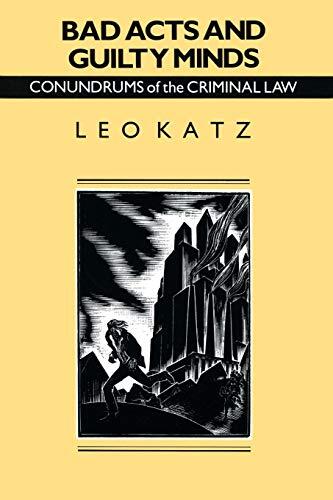
Leo Katz delves into the intricacies of criminal law, probing the often perplexing disconnect between conduct and culpability. He examines the underlying principles that govern judgments of guilt and the moral dilemmas posed by legal definitions of crime. Through a combination of insightful analysis and engaging prose, Katz invites readers to reflect on the complexities of legal interpretation and the philosophical quandaries that arise in the justice system.
His exploration reveals a tension between the law's rigid definitions and the often nuanced realities of human behavior. Katz's arguments challenge conventional wisdom, pushing the boundaries of how society views guilt and responsibility. By addressing the gray areas of legal doctrine, he illuminates the quandaries faced by both lawmakers and everyday citizens when confronted with moral choices.
As he navigates through a range of examples and case studies, Katz’s approach keeps readers engaged, fostering a deeper appreciation for the intricacies of the law. His ability to blend humor with serious concepts makes for a thought-provoking read. Ultimately, his work prompts readers to reconsider their perspectives on justice and the complexities inherent in defining right and wrong.
His exploration reveals a tension between the law's rigid definitions and the often nuanced realities of human behavior. Katz's arguments challenge conventional wisdom, pushing the boundaries of how society views guilt and responsibility. By addressing the gray areas of legal doctrine, he illuminates the quandaries faced by both lawmakers and everyday citizens when confronted with moral choices.
As he navigates through a range of examples and case studies, Katz’s approach keeps readers engaged, fostering a deeper appreciation for the intricacies of the law. His ability to blend humor with serious concepts makes for a thought-provoking read. Ultimately, his work prompts readers to reconsider their perspectives on justice and the complexities inherent in defining right and wrong.