

Description
"These people also used certain characters or letters, with which they wrote in their books about the antiquities and their sciences...We found a great number of books in these letters, and since they contained nothing but superstitions and falsehoods of the devil we burned them all, which they took most grievously, and which gave them great pain."
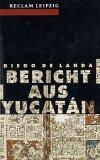
So writes Friar Diego de Landa in his Relacion de las cosas de Yucatan of 1566, the basic book in Maya studies. Landa did all he could to wipe out Maya culture and civilization. In the famous auto-da-te of July 1562 at Mani, as he tells us, he destroyed 5,000 "idols" and burned 27 heiroglyphic rolls. And yet paradoxically Landa's book, written in Spain to defend himself against charges of despotic mismanagement, is the only significant account of Yucatan done in the early post-Conquest era. As the distinguished Maya scholar William Gates states in his introduction, "ninety-nine percent of what we today know of the Mayas, we know as the result either of what Landa has told us in the pages that follow, or have learned in the use and study of what he told."
So writes Friar Diego de Landa in his Relacion de las cosas de Yucatan of 1566, the basic book in Maya studies. Landa did all he could to wipe out Maya culture and civilization. In the famous auto-da-te of July 1562 at Mani, as he tells us, he destroyed 5,000 "idols" and burned 27 heiroglyphic rolls. And yet paradoxically Landa's book, written in Spain to defend himself against charges of despotic mismanagement, is the only significant account of Yucatan done in the early post-Conquest era. As the distinguished Maya scholar William Gates states in his introduction, "ninety-nine percent of what we today know of the Mayas, we know as the result either of what Landa has told us in the pages that follow, or have learned in the use and study of what he told."
Book Details
Format
Paperback
Pages
239 pages
Language
German
Published
Jan 1, 2007
Publisher
Reclam
ISBN-10
3379005282
ISBN-13
9783379005289