

Description
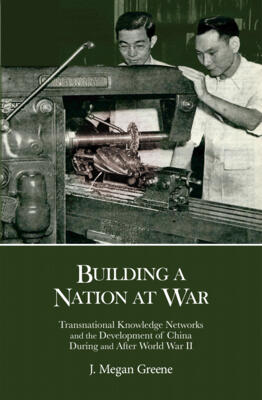
In the midst of World War II, the Chinese Nationalist government faced immense challenges as it retreated inland. J Megan Greene delves into the intricate web of transnational knowledge networks that emerged during this tumultuous time, revealing how they played a crucial role in shaping modern China. The author examines the exchange of ideas, technologies, and strategies that occurred among various global players, illustrating how these interactions influenced China's development amid war and upheaval.
Greene's exploration extends beyond mere historical events, examining the lasting impact of these exchanges on China's post-war trajectory. By weaving together personal narratives and broader geopolitical analyses, the work presents a rich tapestry of resilience and adaptation. The book sheds light on how a nation not only survived the ravages of conflict but also harnessed its experiences to forge a new identity in the aftermath of war.
Greene's exploration extends beyond mere historical events, examining the lasting impact of these exchanges on China's post-war trajectory. By weaving together personal narratives and broader geopolitical analyses, the work presents a rich tapestry of resilience and adaptation. The book sheds light on how a nation not only survived the ravages of conflict but also harnessed its experiences to forge a new identity in the aftermath of war.
Book Details
Format
Hardcover
Pages
336 pages
Language
English
Published
Sep 27, 2022
Publisher
Harvard University Asia Center
ISBN-10
0674278313
ISBN-13
9780674278318