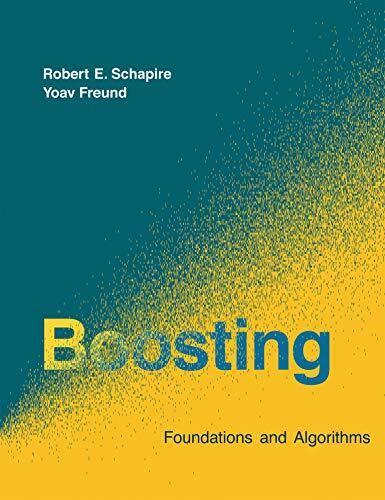
Description
In a world increasingly driven by data, understanding the nature of causation becomes paramount. This work delves into the intricate relationship between observation and causal inference, exploring the underlying assumptions and methodologies that illuminate how we can derive meaningful knowledge from empirical evidence. The authors meticulously dissect the processes involved in transforming raw data into coherent causal insights, presenting their findings in an accessible yet rigorous manner.
With a focus on both theoretical frameworks and practical applications, the book engages with the challenges faced by researchers in various fields, ranging from social sciences to natural sciences. The discussions weave through complex topics like probabilistic reasoning and graphical models, demonstrating how they can be employed as tools for understanding causal structures. Through well-crafted examples, the authors illustrate how one can navigate the ambiguities of prediction while remaining committed to establishing causative relationships.
The authors draw from their extensive expertise to guide readers through the nuances of causal analysis, making a compelling case for the importance of rigorous methodologies in the pursuit of knowledge. They emphasize the criticality of sound assumptions while urging caution in interpretation, highlighting common pitfalls that may arise in the research process.
Ultimately, this comprehensive examination not only seeks to clarify the township between causation and prediction but also invites readers to consider the broader implications of their findings. As data continues to shape decision-making in our society, this work offers essential insights for those who wish to make sense of the causal complexities that underlie the world around us.
With a focus on both theoretical frameworks and practical applications, the book engages with the challenges faced by researchers in various fields, ranging from social sciences to natural sciences. The discussions weave through complex topics like probabilistic reasoning and graphical models, demonstrating how they can be employed as tools for understanding causal structures. Through well-crafted examples, the authors illustrate how one can navigate the ambiguities of prediction while remaining committed to establishing causative relationships.
The authors draw from their extensive expertise to guide readers through the nuances of causal analysis, making a compelling case for the importance of rigorous methodologies in the pursuit of knowledge. They emphasize the criticality of sound assumptions while urging caution in interpretation, highlighting common pitfalls that may arise in the research process.
Ultimately, this comprehensive examination not only seeks to clarify the township between causation and prediction but also invites readers to consider the broader implications of their findings. As data continues to shape decision-making in our society, this work offers essential insights for those who wish to make sense of the causal complexities that underlie the world around us.
Book Details
Format
Hardcover
Pages
543 pages
Language
English
Published
Jan 8, 2001
Publisher
Bradford Books
Editions
3 editions
ISBN-10
0262194406
ISBN-13
9780262194402
Genres
Romance
Science & Technology
History