Description
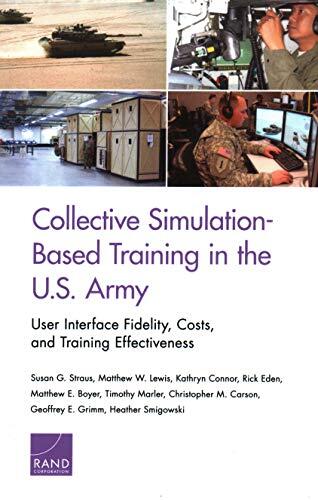
This work delves into the evolving landscape of collective simulation-based training within the U.S. Army. The authors investigate the crucial components of user interface fidelity, shedding light on how realistic and effective these training programs can be. With technology continuously advancing, understanding how interface design impacts soldier engagement and learning outcomes becomes vital.
An essential aspect of the study is cost analysis. The authors explore the financial implications of implementing high-fidelity simulations versus more simplistic alternatives, challenging readers to consider not just effectiveness but also efficiency and budget constraints in military training endeavors. By balancing these factors, the work aims to guide decision-makers in optimizing training strategies.
The research also emphasizes the effectiveness of simulation training, arguing that when properly executed, these programs can greatly enhance soldiers' preparedness for real-world scenarios. Engaging with both qualitative and quantitative findings, the authors present a comprehensive view that underscores the importance of realistic simulations in military readiness.
By presenting these insights, the authors contribute significantly to the fields of military training and simulation, offering valuable recommendations for enhancing the overall training experience while maintaining budgetary considerations. This exploration serves as an important resource for military educators, trainers, and policy developers looking to improve training frameworks.
An essential aspect of the study is cost analysis. The authors explore the financial implications of implementing high-fidelity simulations versus more simplistic alternatives, challenging readers to consider not just effectiveness but also efficiency and budget constraints in military training endeavors. By balancing these factors, the work aims to guide decision-makers in optimizing training strategies.
The research also emphasizes the effectiveness of simulation training, arguing that when properly executed, these programs can greatly enhance soldiers' preparedness for real-world scenarios. Engaging with both qualitative and quantitative findings, the authors present a comprehensive view that underscores the importance of realistic simulations in military readiness.
By presenting these insights, the authors contribute significantly to the fields of military training and simulation, offering valuable recommendations for enhancing the overall training experience while maintaining budgetary considerations. This exploration serves as an important resource for military educators, trainers, and policy developers looking to improve training frameworks.
Book Details
Format
Paperback
Pages
172 pages
Language
English
Published
Apr 15, 2019
Publisher
RAND Corporation
ISBN-10
1977401325
ISBN-13
9781977401328
Genres
Art & Photography