

Description
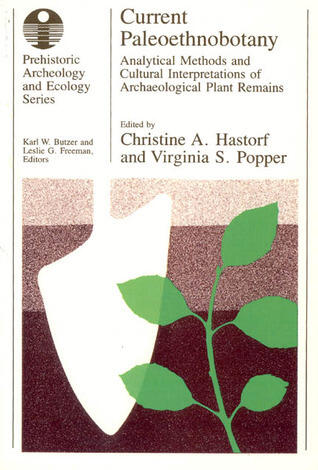
This work delves into the intricate relationship between humans and plants throughout history, showcasing how archaeological plant remains can reveal significant insights into past cultures. The authors highlight various analytical methods used in paleoethnobotany, emphasizing their importance in understanding subsistence patterns, socio-economic structures, and cultural practices of ancient communities.
Christine A. Hastorf and Virginia S. Popper guide readers through both established and innovative techniques, demonstrating how these methodologies can enrich interpretations of archaeological findings. By placing emphasis on the cultural context, they illustrate how plant remains serve not only as remnants of diet but also as reflections of identity and environmental adaptation.
Through case studies and theoretical discussions, this volume encourages a multidisciplinary approach, appealing to archaeologists, botanists, and anthropologists alike. It empowers researchers to draw connections between the past and present, ultimately enhancing our comprehension of human-plant interactions over time.
Christine A. Hastorf and Virginia S. Popper guide readers through both established and innovative techniques, demonstrating how these methodologies can enrich interpretations of archaeological findings. By placing emphasis on the cultural context, they illustrate how plant remains serve not only as remnants of diet but also as reflections of identity and environmental adaptation.
Through case studies and theoretical discussions, this volume encourages a multidisciplinary approach, appealing to archaeologists, botanists, and anthropologists alike. It empowers researchers to draw connections between the past and present, ultimately enhancing our comprehension of human-plant interactions over time.
Book Details
Format
Paperback
Pages
243 pages
Language
English
Published
Jan 15, 1989
Publisher
University of Chicago Press
Editions
2 editions
ISBN-10
0226318931
ISBN-13
9780226318936