Description
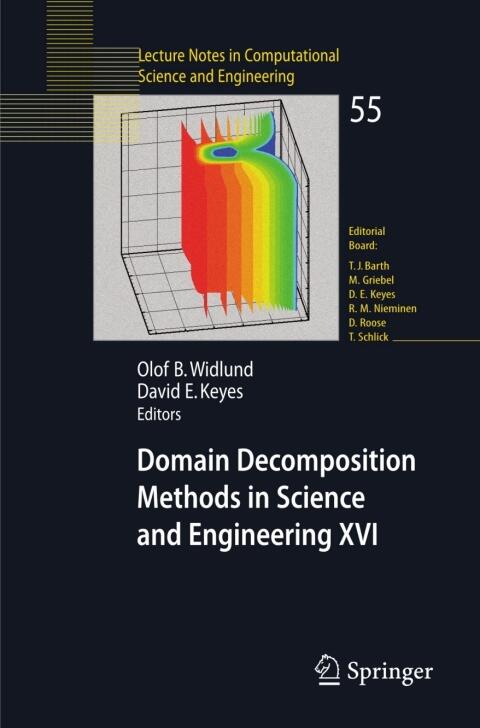
The latest volume in the series on domain decomposition methods presents a comprehensive overview of the significant advancements achieved in this interdisciplinary field. Researchers and practitioners alike will find valuable insights into the innovative techniques that facilitate the partitioning of complex problems across various computational domains. This approach has become increasingly vital in the realms of science and engineering, where efficient solutions are paramount.
The contributors to the volume encompass a diverse range of expertise, each bringing unique perspectives and methodologies that enhance the understanding of domain decomposition strategies. The discussions delve into both theoretical foundations and practical applications, making the material accessible to a broad audience, from seasoned scientists to newcomers in the field.
As computational models grow ever more complex, the need for effective domain decomposition methods continues to rise. The book showcases case studies, algorithms, and numerical experiments that illustrate the versatility of these methods across different applications, ensuring that readers are up-to-date with current trends and technologies.
This rich compilation not only reinforces the relevance of domain decomposition in modern computational science but also highlights exciting future directions for research. As the authors illuminate current challenges and propose solutions, the volume stands as a significant contribution to the ongoing dialogue within the scientific community.
The contributors to the volume encompass a diverse range of expertise, each bringing unique perspectives and methodologies that enhance the understanding of domain decomposition strategies. The discussions delve into both theoretical foundations and practical applications, making the material accessible to a broad audience, from seasoned scientists to newcomers in the field.
As computational models grow ever more complex, the need for effective domain decomposition methods continues to rise. The book showcases case studies, algorithms, and numerical experiments that illustrate the versatility of these methods across different applications, ensuring that readers are up-to-date with current trends and technologies.
This rich compilation not only reinforces the relevance of domain decomposition in modern computational science but also highlights exciting future directions for research. As the authors illuminate current challenges and propose solutions, the volume stands as a significant contribution to the ongoing dialogue within the scientific community.
Book Details
Format
Kindle
Pages
784 pages
Language
English
Published
Jan 1, 2007
Publisher
Springer
Edition
2007
Editions
2 editions
ISBN-10
3540344691
ISBN-13
9783540344698
Genres
Science & Technology