

Description
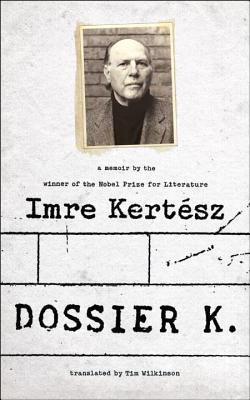
The first and only memoir from the Nobel Prize-winning author, in the form of an illuminating, often funny, and often combative interview--conducted by the author of himself.
"Dossier K" is Imre Kertesz's response to the hasty biographies and profiles that followed his 2002 Nobel Prize, an attempt to set the record straight. But, as befits Kertesz, it's a beautifully roundabout way of going straight: Kertesz faces and interrogates himself about the issues and events that have long preoccupied him, while also dealing with the questions that really annoy him (such as, "Is your work autobiographical?").
The result is an extraordinary self-portrait, in which Kertesz recounts memories of his childhood in Budapest; the years that lead up to the Second World War and his first encounters with anti-Semitism; the incredible forged record of his death in Buchenwald that may in fact have saved his life; his release from the camps and his return to his family; Hungary's Rakosi and Kadar regimes and the terror, hypocrisy, and absurdity they entailed; his thoughts about what other writers have written about the Holocaust; his two marriages; and his long development as a writer.
This is a surprising and provocative autobiography that delves into questions about the legacy of the Holocaust, fiction and reality, and what Kertesz calls "the wonderful burden of being responsible for yourself.
Book Details
Format
eBook
Language
English
Published
Jun 27, 2013
Publisher
Melville House Publishing
Editions
3 editions
ISBN-10
1299564402
ISBN-13
9781299564404