

Description
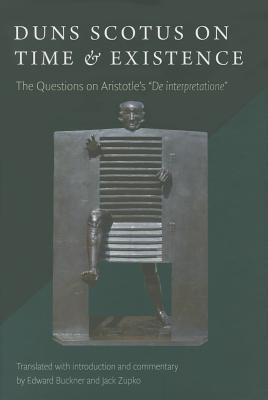
Duns Scotus emerges as a pivotal figure in medieval philosophy, particularly in his exploration of time and existence, as influenced by Aristotle's "De interpretatione." Through the lens of Scotus's work, an intricate conversation unfolds regarding the nature of reality, language, and the philosophical implications of temporal structures. His nuanced thought marks a significant departure from the prevailing notions of his time, offering insights that resonate even in contemporary discourse.
The contributions of Edward Buckner and Jack Zupko provide a thorough examination of Scotus's arguments, revealing layers of complexity that reflect not only his intellectual prowess but also his desire to understand the human experience in relation to time. Their collaborative analysis invites readers to engage deeply with Scotus's legacy, encouraging a fresh appreciation of how medieval concepts still influence modern philosophy.
The contributions of Edward Buckner and Jack Zupko provide a thorough examination of Scotus's arguments, revealing layers of complexity that reflect not only his intellectual prowess but also his desire to understand the human experience in relation to time. Their collaborative analysis invites readers to engage deeply with Scotus's legacy, encouraging a fresh appreciation of how medieval concepts still influence modern philosophy.
Book Details
Format
Hardcover
Pages
376 pages
Language
English
Published
Oct 5, 2014
Publisher
The Catholic University of America Press
ISBN-10
0813226031
ISBN-13
9780813226033