Description
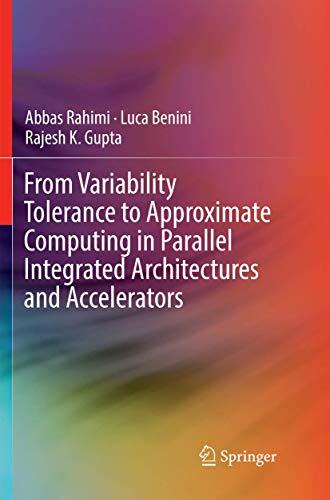
This book delves into the intricate world of parallel integrated architectures and accelerators, exploring the transition from variability tolerance to the principles of approximate computing. It takes a deep dive into the challenges posed by variability in hardware design and how this variability can be harnessed to enhance computing efficiency. With insights from prominent experts in the field, the authors shed light on cutting-edge methodologies that aim to optimize performance while balancing power consumption and reliability.
The text blends theoretical concepts with practical applications, making it an essential resource for researchers and engineers alike. Readers will find discussions on innovative design strategies, real-world case studies, and future directions in computing technologies. As the demand for high-performance computing continues to escalate, this work serves as a vital guide for navigating the evolving landscape of parallel architectures, offering a glimpse into the future of computing where approximation becomes a standard practice.
The text blends theoretical concepts with practical applications, making it an essential resource for researchers and engineers alike. Readers will find discussions on innovative design strategies, real-world case studies, and future directions in computing technologies. As the demand for high-performance computing continues to escalate, this work serves as a vital guide for navigating the evolving landscape of parallel architectures, offering a glimpse into the future of computing where approximation becomes a standard practice.
Book Details
Format
Paperback
Pages
212 pages
Language
English
Published
Jul 25, 2018
Publisher
Springer
Edition
Softcover reprint of the original 1st ed. 2017
Editions
5 editions
ISBN-10
3319852396
ISBN-13
9783319852393