

Description
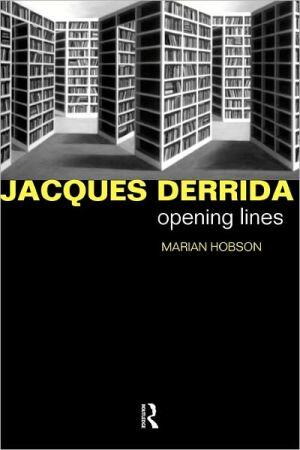
Marian Hobson offers a thoughtful exploration of Jacques Derrida's philosophy, delving into the intricacies of his ideas and how they shaped contemporary thought. Through meticulous analysis, Hobson presents Derrida not just as a philosopher, but as a pivotal figure whose notions continue to resonate across various disciplines.
The book serves as an engaging introduction to Derrida's concepts, chosen specifically for their relevance and impact over time. Hobson’s articulate prose makes complex theories accessible, inviting readers to grapple with foundational questions of meaning, interpretation, and the deconstruction of texts.
With her keen insights, Hobson contextualizes Derrida within the broader landscape of 20th-century criticism, examining how his work both challenged and enriched traditional views. Readers will find themselves drawn into a dialogue that transcends academia, touching on the philosophical underpinnings of modern existence.
By weaving together critical analysis and philosophical inquiry, the text provides a rich tapestry of understanding that encourages deeper reflection on the nature of language and thought. It's a compelling read for anyone interested in the evolution of critical theory and the lasting legacy of Jacques Derrida.
The book serves as an engaging introduction to Derrida's concepts, chosen specifically for their relevance and impact over time. Hobson’s articulate prose makes complex theories accessible, inviting readers to grapple with foundational questions of meaning, interpretation, and the deconstruction of texts.
With her keen insights, Hobson contextualizes Derrida within the broader landscape of 20th-century criticism, examining how his work both challenged and enriched traditional views. Readers will find themselves drawn into a dialogue that transcends academia, touching on the philosophical underpinnings of modern existence.
By weaving together critical analysis and philosophical inquiry, the text provides a rich tapestry of understanding that encourages deeper reflection on the nature of language and thought. It's a compelling read for anyone interested in the evolution of critical theory and the lasting legacy of Jacques Derrida.
Book Details
Format
Paperback
Pages
304 pages
Language
English
Published
Sep 3, 1998
Publisher
Routledge
Editions
3 editions
ISBN-10
0415137861
ISBN-13
9780415137867