Description
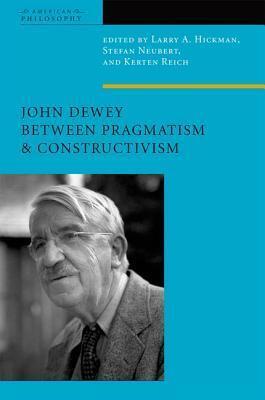
John Dewey's philosophical journey is a captivating exploration of the intersection between pragmatism and constructivism. The authors delve into Dewey's critical perspectives on traditional educational practices, illuminating how his insights remain profoundly relevant in today’s discussions about learning and knowledge construction. They provide a thorough examination of how Dewey's ideas have shaped contemporary thought, emphasizing the dynamic relationship between experience and learning.
As they navigate the complexities of Dewey's theories, Hickman, Reich, and Neubert highlight the importance of engaging learners as active participants in their education. They argue that Dewey’s innovative approach advocates for a transformative educational experience that encourages critical thinking and real-world application rather than rote memorization. This emphasis on experiential learning continues to resonate in modern educational frameworks, making Dewey's work vital to both scholars and educators.
Through a rich blend of historical context and contemporary analysis, the book offers readers an in-depth understanding of how Dewey's pragmatism has evolved into constructivist thought, providing crucial insights into the ongoing dialogue about the purpose of education in society. It serves as a valuable resource for anyone interested in the philosophical underpinnings of educational theory, presenting Dewey not only as a thinker of the past but as a beacon guiding present and future educational practices.
Book Details
Format
Hardcover
Pages
296 pages
Language
English
Published
Mar 16, 2009
Publisher
Fordham University Press
Editions
4 editions
ISBN-10
082323018X
ISBN-13
9780823230181