Description
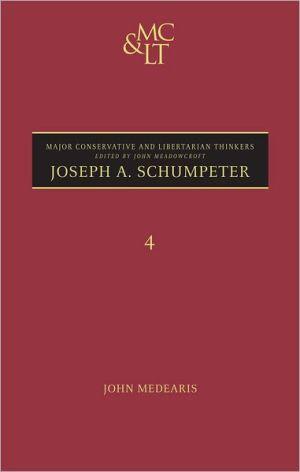
John Medearis delves into the life and ideas of Joseph A. Schumpeter, a significant figure in the realms of economics and political theory. The narrative unfolds against the backdrop of Schumpeter's early years in the Austro-Hungarian Empire, highlighting how the sociopolitical climate of the time shaped his conservative ideology. Medearis intricately traces the evolution of Schumpeter's thoughts from 1883 to 1913, revealing the foundational experiences that influenced his perspectives on capitalism and democracy.
The work emphasizes Schumpeter's understanding of economic dynamics and societal changes, set against a backdrop of war and fragmentation. Medearis presents a thoughtful exploration of Schumpeter's belief in the adaptive capacity of societies amidst upheaval, a notion that resonates with contemporary challenges. By examining the complexities of Tory democracy and the nuances of Schumpeter's contributions, the reader gains a richer understanding of how historical contexts inform financial and political theories.
Ultimately, Medearis offers an engaging glimpse into the life of a thinker who navigated the turbulent waters of his time, demonstrating how his insights can inform modern economic and political discourse. Schumpeter’s legacy emerges not just as an economist's contributions, but as a reflection of his deep engagement with the world around him, making this work a compelling read for anyone interested in the intersections of economics, politics, and history.
The work emphasizes Schumpeter's understanding of economic dynamics and societal changes, set against a backdrop of war and fragmentation. Medearis presents a thoughtful exploration of Schumpeter's belief in the adaptive capacity of societies amidst upheaval, a notion that resonates with contemporary challenges. By examining the complexities of Tory democracy and the nuances of Schumpeter's contributions, the reader gains a richer understanding of how historical contexts inform financial and political theories.
Ultimately, Medearis offers an engaging glimpse into the life of a thinker who navigated the turbulent waters of his time, demonstrating how his insights can inform modern economic and political discourse. Schumpeter’s legacy emerges not just as an economist's contributions, but as a reflection of his deep engagement with the world around him, making this work a compelling read for anyone interested in the intersections of economics, politics, and history.
Book Details
Format
Hardcover
Pages
176 pages
Language
English
Published
May 15, 2009
Publisher
Continuum
Edition
1
Editions
3 editions
ISBN-10
0826430120
ISBN-13
9780826430120
Genres
Business & Economics