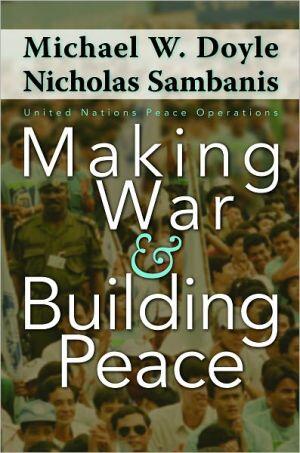
Description
Michael W. Doyle and Nicholas Sambanis delve into the complexities of United Nations peacekeeping missions, exploring their efficacy in the aftermath of civil conflicts. With a focus on the delicate balance between military presence and sustainable peace, the authors assess various missions and their outcomes across different regions. Drawing from a wealth of case studies, they reveal the nuanced factors that contribute to both the successes and challenges faced by UN operations.
The narrative unfolds as the duo scrutinizes missions that have struggled amidst political turmoil and societal division, offering insights into the lessons learned from each endeavor. They emphasize that while the UN plays a crucial role in stabilizing post-conflict environments, the success of peacekeeping is not solely reliant on military intervention. The authors argue that fostering local governance and community trust is imperative for long-lasting peace.
Doyle and Sambanis are meticulous in their analysis, considering the implications of resource allocation, strategic planning, and international cooperation. Their exploration reveals a landscape fraught with obstacles, yet also teeming with opportunities for effective intervention.
Through a combination of theoretical frameworks and practical evaluations, the book serves as a critical resource for policymakers, scholars, and anyone invested in understanding the intricate dynamics of peace operations. The authors aim to provide clarity on how to better shape UN missions to adapt to the ever-evolving challenges of global peacekeeping.
Book Details
Format
Kindle
Pages
421 pages
Language
English
Published
Jan 1, 2011
Publisher
Princeton University Press
Edition
2
Editions
4 editions
ISBN-10
1400837693
ISBN-13
9781400837694