

Description
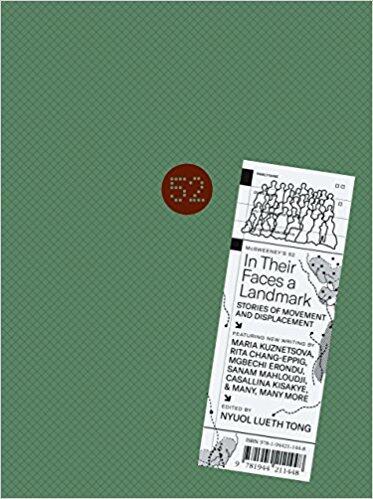
In this splendid new edition of McSweeney’s, guest-editor Nyuol Lueth Tong curates a collection of seventeen remarkable new stories from immigrant and refugee writers, the likes of which include Novuyo Tshuma, Maria Kuznetsova, Meron Hadero, and Eskor David Johnson. Inside are stories of home and family, of punctured soccer balls and misused Rolexes, of code-switching and generational divides and burying loved ones and prank-calling 911.
Editor's note (Nyuol Lueth Tong)
There is a genre called migrant literature. It covers works by immigrant writers, often about the immigrant experience. Among its chief concerns or themes are displacement, movement, belonging, homecoming, departure, arrival, assimilation, bilingualism, and so on. I suppose we can fairly assume this collection of stories by immigrant writers belongs to that tradition. As immigrant writers, creative spirits caught between worlds whose boundaries are ever shifting, often resulting in more displacement and migration, it is comforting to know there exists a coterie to which belonging is conceivable.
That said, we should embrace this veritable genre with caution, for despite its liberating possibilities, it also preserves the very logic of our exclusion, namely our “foreignness,” our “otherness,” often deployed as a mark of inferiority, marginality, and disposability. In other words, it relegates our works to the periphery of provincialism, outside the so-called canon of world literature. Migrant literature is not only a constitutive part of global literature but also arguably its most vital, exciting, innovative element, concerned as it is with exploring themes and questions that are universal and timeless, yet urgent and humane. All the pieces in this issue exhibit this irreducible quality.
Editor's note (Nyuol Lueth Tong)
There is a genre called migrant literature. It covers works by immigrant writers, often about the immigrant experience. Among its chief concerns or themes are displacement, movement, belonging, homecoming, departure, arrival, assimilation, bilingualism, and so on. I suppose we can fairly assume this collection of stories by immigrant writers belongs to that tradition. As immigrant writers, creative spirits caught between worlds whose boundaries are ever shifting, often resulting in more displacement and migration, it is comforting to know there exists a coterie to which belonging is conceivable.
That said, we should embrace this veritable genre with caution, for despite its liberating possibilities, it also preserves the very logic of our exclusion, namely our “foreignness,” our “otherness,” often deployed as a mark of inferiority, marginality, and disposability. In other words, it relegates our works to the periphery of provincialism, outside the so-called canon of world literature. Migrant literature is not only a constitutive part of global literature but also arguably its most vital, exciting, innovative element, concerned as it is with exploring themes and questions that are universal and timeless, yet urgent and humane. All the pieces in this issue exhibit this irreducible quality.
Book Details
Format
Hardcover
Pages
317 pages
Language
English
Published
Mar 27, 2018
Publisher
McSweeney's
ISBN-10
1944211578
ISBN-13
9781944211578