

Description
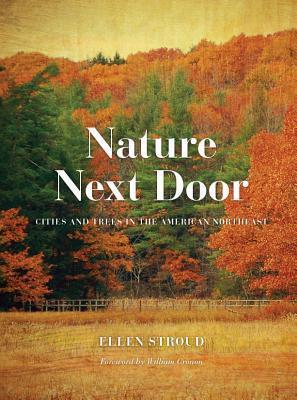
The once denuded northeastern United States is now a region of trees. Nature Next Door argues that the growth of cities, the construction of parks, the transformation of farming, the boom in tourism, and changes in the timber industry have together brought about a return of northeastern forests. Although historians and historical actors alike have seen urban and rural areas as distinct, they are in fact intertwined, and the dichotomies of farm and forest, agriculture and industry, and nature and culture break down when the focus is on the history of Northeastern woods. Cities, trees, mills, rivers, houses, and farms are all part of a single transformed regional landscape.
In an examination of the cities and forests of the northeastern United States-with particular attention to the woods of Maine, New Hampshire, Pennsylvania, and Vermont-Ellen Stroud shows how urbanization processes there fostered a period of recovery for forests, with cities not merely consumers of nature but creators as well. Interactions between city and hinterland in the twentieth century Northeast created a new wildness of metropolitan a reforested landscape intricately entangled with the region's cities and towns.
In an examination of the cities and forests of the northeastern United States-with particular attention to the woods of Maine, New Hampshire, Pennsylvania, and Vermont-Ellen Stroud shows how urbanization processes there fostered a period of recovery for forests, with cities not merely consumers of nature but creators as well. Interactions between city and hinterland in the twentieth century Northeast created a new wildness of metropolitan a reforested landscape intricately entangled with the region's cities and towns.
Book Details
Format
Paperback
Pages
192 pages
Language
English
Published
Aug 1, 2013
Publisher
University of Washington Press
Editions
3 editions
ISBN-10
0295993316
ISBN-13
9780295993317
Genres
History
Nature