Description
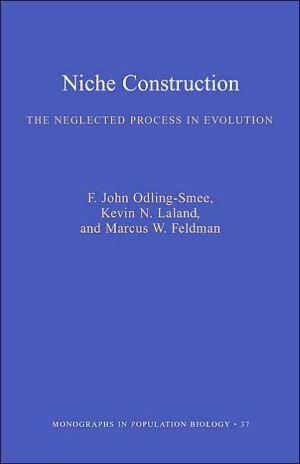
Marcus W. Feldman, F. John Odling-Smee, and Kevin N. Lala delve into the often-overlooked concept of niche construction, illustrating how organisms not only adapt to their environments but also actively shape them. Through a comprehensive exploration of evolutionary theory, the authors argue that the interplay between organisms and their environments is a crucial factor in the process of evolution. They highlight the significance of behavioral adaptations and ecological modifications that occur as species interact with their surroundings.
The book challenges traditional views by emphasizing that humans, like many other species, are agents of change in their ecosystems. Their activities—from agriculture to urban development—underscore the impact of niche construction on biodiversity and ecological dynamics. By examining historical and contemporary examples, the authors provide a framework for understanding the evolutionary implications of these changes, encouraging readers to reconsider the role of agency in both natural and human-modified landscapes.
The book challenges traditional views by emphasizing that humans, like many other species, are agents of change in their ecosystems. Their activities—from agriculture to urban development—underscore the impact of niche construction on biodiversity and ecological dynamics. By examining historical and contemporary examples, the authors provide a framework for understanding the evolutionary implications of these changes, encouraging readers to reconsider the role of agency in both natural and human-modified landscapes.
Book Details
Format
Paperback
Pages
488 pages
Language
English
Published
Jan 1, 2003
Publisher
Princeton University Press
Edition
1st Edition
Editions
3 editions
ISBN-10
0691044376
ISBN-13
9780691044378