

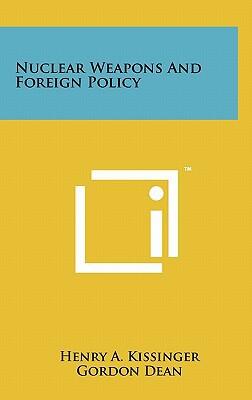
Description
In "Nuclear Weapons and Foreign Policy," Henry A. Kissinger delves deep into the complex interplay between nuclear armament and international relations during a transformative era in global politics. Kissinger, a prominent figure in American diplomacy, examines how the introduction of nuclear weapons reshaped power dynamics and influenced strategic decisions among nations. His analysis offers a profound understanding of the political landscape, revealing how nuclear capabilities shifted the balance in international diplomacy.
Throughout the exploration, Kissinger articulately navigates the delicate tensions that arise from nuclear proliferation. He reflects on the ethics and moral quandaries surrounding the use of such powerful weapons, as well as the implications for global security. The discussion highlights the necessity for nuanced policies in the face of existential threats and the high stakes that leaders faced in their foreign relations strategies.
The narrative underscores the urgency of dialogue and cooperation in an increasingly complex world. Kissinger's insights resonate with the challenges of deterrence and the potential for conflict, making this work a significant contribution to the discourse on international security and diplomatic policy in the nuclear age.
Throughout the exploration, Kissinger articulately navigates the delicate tensions that arise from nuclear proliferation. He reflects on the ethics and moral quandaries surrounding the use of such powerful weapons, as well as the implications for global security. The discussion highlights the necessity for nuanced policies in the face of existential threats and the high stakes that leaders faced in their foreign relations strategies.
The narrative underscores the urgency of dialogue and cooperation in an increasingly complex world. Kissinger's insights resonate with the challenges of deterrence and the potential for conflict, making this work a significant contribution to the discourse on international security and diplomatic policy in the nuclear age.
Book Details
Format
Hardcover
Pages
482 pages
Language
English
Published
Apr 26, 2011
Publisher
Literary Licensing, LLC
Editions
2 editions
ISBN-10
1258006642
ISBN-13
9781258006648