

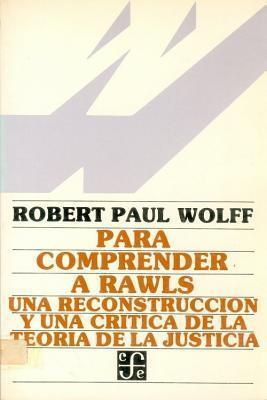
Description
From th introduction by the author
Briefly, I propose to read A Theory of Justice not as a single piece of philosophical argument to be tested and accepted whole, but as a complex, many-layered record of at least twenty years of philosophical growth and development. I shall argue that Rawls began with a simple, coherent, comprehensible problem and a brilliant idea for its solution [...] The labyrinthic complexities of A Theory of Justice are the consequences of at least three stages in the development of Rawls´thought, in each of which he complicated his theory to meet objections others had raised to earlier versions, or which he himself perceived.
Contents
PART ONE: INTRODUCTION
1. Introductory remarks
2. The problem
3. The key
PART TWO: THE DEVELOPMENT OF THE THEORY
4. The first form of the model
5. A critique of the first form of the model
6. The second form of the model
7. A critique of the second form of the model
8. The third form of the model
9. The priority of liberty and other complications
PART THREE: RAWLS AND KANT
10. Kant and Rawls
11. The Kantian background
12. The Kantian interpretation of the original position
PART FOUR: A CRITIQUE OF THE THEORY
13. The general facts about human society
14. Primary goods and life-plans
15. A formal analysis of the bargaining game
16. The logical status of Rawls´s argument
PART FIVE: IS RAWLS RIGHT?
17. The abstractness of Rawls´s Theory
Bibliography
Index
Book Details
Format
Paperback
Pages
205 pages
Language
Spanish
Published
Jan 1, 2012
Publisher
Fondo de Cultura Economica
ISBN-10
9681607929
ISBN-13
9789681607920