

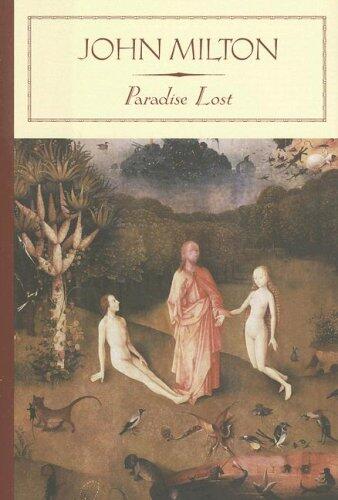
Description
Paradise Lost , by John Milton , is part of the Barnes & Noble Classics series, which offers quality editions at affordable prices to the student and the general reader, including new scholarship, thoughtful design, and pages of carefully crafted extras. Here are some of the remarkable features of Barnes & Noble Classics : New introductions commissioned from today's top writers and scholars Biographies of the authors Chronologies of contemporary historical, biographical, and cultural events Footnotes and endnotes Selective discussions of imitations, parodies, poems, books, plays, paintings, operas, statuary, and films inspired by the work Comments by other famous authors Study questions to challenge the reader's viewpoints and expectations Bibliographies for further reading Indices & Glossaries, when appropriateAll editions are beautifully designed and are printed to superior specifications; some include illustrations of historical interest. Barnes & Noble Classics pulls together a constellation of influences—biographical, historical, and literary—to enrich each reader's understanding of these enduring works.
As a young student, John Milton fantasized about bringing the poetic elocution of Homer and Virgil to the English language. Milton realized this dream with his graceful, sonorous Paradise Lost , now considered the most influential epic poem in English literature.
A retelling of the biblical story of mankind’s fall from grace, Milton’s epic opens shortly after the dramatic expulsion of Satan and his army of angels from Heaven. What follows is a cosmic battle between good and evil that ranges across vast, splendid tracts of time and space, from the wild abyss of Chaos and the fiery lake of Hell to the Gate of Heaven and God’s newly created paradise, the Garden of Eden. Controversy still swirls around Milton’s magnificent and sympathetic characterization of Satan, a portrait so compelling that many critics have maintained that he is the true hero of the story. David Hawkes is Associate Professor of English at Lehigh University. His books include Idols of the Marketplace (2001) and Ideology (second edition, 2003), and he has contributed articles to The Nation , the Times Literary Supplement , and the Journal of the History of Ideas .
As a young student, John Milton fantasized about bringing the poetic elocution of Homer and Virgil to the English language. Milton realized this dream with his graceful, sonorous Paradise Lost , now considered the most influential epic poem in English literature.
A retelling of the biblical story of mankind’s fall from grace, Milton’s epic opens shortly after the dramatic expulsion of Satan and his army of angels from Heaven. What follows is a cosmic battle between good and evil that ranges across vast, splendid tracts of time and space, from the wild abyss of Chaos and the fiery lake of Hell to the Gate of Heaven and God’s newly created paradise, the Garden of Eden. Controversy still swirls around Milton’s magnificent and sympathetic characterization of Satan, a portrait so compelling that many critics have maintained that he is the true hero of the story. David Hawkes is Associate Professor of English at Lehigh University. His books include Idols of the Marketplace (2001) and Ideology (second edition, 2003), and he has contributed articles to The Nation , the Times Literary Supplement , and the Journal of the History of Ideas .
Book Details
Format
Hardcover
Pages
496 pages
Language
English
Published
Aug 10, 2005
Publisher
Barnes & Noble Classics
Edition
First Edition
Editions
718 editions
ISBN-10
1593083645
ISBN-13
9781593083649
Genres
Romance
Mystery
Science Fiction
Dystopian
Thriller & Suspense
Children’s
Biography
Action & Adventure
Religion & Spirituality
Science & Technology
History
Horror
Philosophy
Poetry
Art & Photography
Classics
Contemporary
Politics
Nature