Book Details
Format
Hardcover
Pages
355
Language
English
Published
Jan 24, 2000
Publisher
Springer
Edition
3rd
ISBN-10
354065285X
ISBN-13
9783540652854
Description
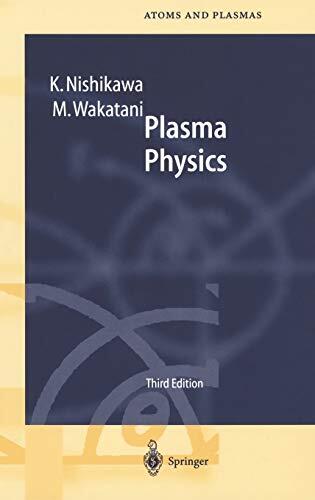
Plasma Physics: Basic Theory with Fusion Applications delves into the foundational concepts of plasma physics while highlighting its significance in the quest for fusion energy. The authors, K. Nishikawa and M. Wakatani, provide readers with a comprehensive understanding of the subject, weaving together theoretical principles and practical applications. Their meticulous approach caters to both newcomers and those with experience in the field, making complex topics accessible.
Throughout the book, the authors emphasize the relevance of plasma physics in contemporary research and technological advances, particularly in fusion energy. They explore the various states of matter and demonstrate how plasma, often dubbed the fourth state, plays a crucial role in both natural phenomena and engineered systems. The text is rich in illustrations and examples that underscore key concepts, helping to bridge the gap between theory and real-world applications.
In addition to foundational theories, the book offers insights into ongoing research efforts in nuclear fusion, positioning plasma physics as a vital area of study in addressing global energy challenges. The blend of rigorous scientific explanation and forward-thinking applications establishes this work as a significant resource for students and professionals alike, eager to explore the future of energy through the lens of plasma physics.
Throughout the book, the authors emphasize the relevance of plasma physics in contemporary research and technological advances, particularly in fusion energy. They explore the various states of matter and demonstrate how plasma, often dubbed the fourth state, plays a crucial role in both natural phenomena and engineered systems. The text is rich in illustrations and examples that underscore key concepts, helping to bridge the gap between theory and real-world applications.
In addition to foundational theories, the book offers insights into ongoing research efforts in nuclear fusion, positioning plasma physics as a vital area of study in addressing global energy challenges. The blend of rigorous scientific explanation and forward-thinking applications establishes this work as a significant resource for students and professionals alike, eager to explore the future of energy through the lens of plasma physics.
Genres
Science & Technology