Description
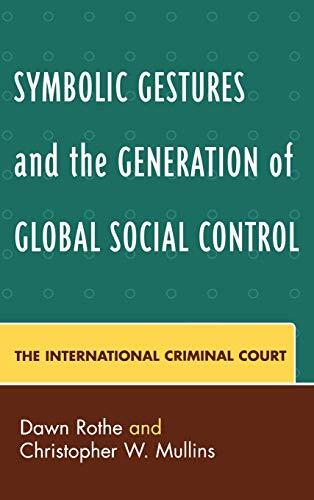
Dawn Rothe and Christopher W. Mullins delve into the complexities of the International Criminal Court (ICC), examining its role as a symbol of hope for global justice. They argue that while the ICC represents a significant advancement in international law, it also embodies challenges related to social control and the dynamics of power in global governance. The authors analyze the court's impact on marginalized populations and the intricate relationship between international legal frameworks and local realities.
Through critical perspectives, Rothe and Mullins explore the broader implications of the ICC's establishment, questioning whether its operations genuinely serve justice or reinforce existing inequalities. They engage with the perspectives of various stakeholders and focus on how symbolic gestures made by global institutions can shape societal attitudes towards crime and punishment. This thought-provoking examination invites readers to consider the delicate balance between idealism and realism in the pursuit of universal justice, emphasizing the need for a nuanced understanding of the ICC's role in an increasingly interconnected world.
Through critical perspectives, Rothe and Mullins explore the broader implications of the ICC's establishment, questioning whether its operations genuinely serve justice or reinforce existing inequalities. They engage with the perspectives of various stakeholders and focus on how symbolic gestures made by global institutions can shape societal attitudes towards crime and punishment. This thought-provoking examination invites readers to consider the delicate balance between idealism and realism in the pursuit of universal justice, emphasizing the need for a nuanced understanding of the ICC's role in an increasingly interconnected world.
Book Details
Format
Hardcover
Pages
248 pages
Language
English
Published
Aug 24, 2006
Publisher
Lexington Books
ISBN-10
073911185X
ISBN-13
9780739111857