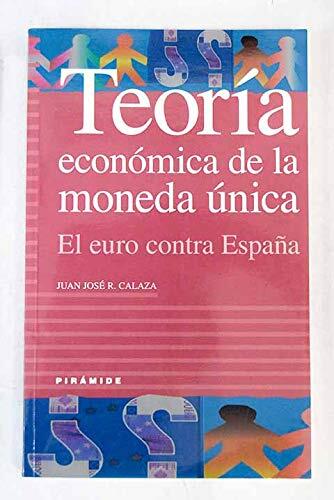
Teoria economica de la moneda unica / Economic Theory of The Single Currency: El Euro Contra Espana
by
Juan J. Rodriguez Calaza
No ratings yet
Business & Economics
Format
Paperback
Pages
224
Language
Spanish
Published
Jan 1, 2022
Publisher
Piramide Ediciones Sa
ISBN-10
8436812018
ISBN-13
9788436812015
Description
Juan J. Rodriguez Calaza delves deeply into the economic intricacies of the euro and its impact on Spain. Through meticulous research and analysis, he explores how the adoption of a single currency influences national economies, with a particular focus on Spain's unique challenges and opportunities in this context.
The work presents a comprehensive look at the theoretical underpinnings of a unified currency, providing a foundation for understanding its benefits and drawbacks. Calaza examines historical data and economic trends, shedding light on the complexities of fiscal policies in a multi-national currency environment.
With an emphasis on the economic ramifications for Spain, the author contemplates issues of economic sovereignty, trade balances, and monetary policy alignment. He argues that while the euro facilitates trade and investment, it also imposes constraints that can hinder national economic strategies.
The book serves as a valuable resource for economists, policymakers, and anyone interested in the broader implications of a single currency on national economies, particularly within the Spanish context. Through careful analysis and a well-researched approach, Calaza contributes significantly to the discourse surrounding currency unification in Europe.
The work presents a comprehensive look at the theoretical underpinnings of a unified currency, providing a foundation for understanding its benefits and drawbacks. Calaza examines historical data and economic trends, shedding light on the complexities of fiscal policies in a multi-national currency environment.
With an emphasis on the economic ramifications for Spain, the author contemplates issues of economic sovereignty, trade balances, and monetary policy alignment. He argues that while the euro facilitates trade and investment, it also imposes constraints that can hinder national economic strategies.
The book serves as a valuable resource for economists, policymakers, and anyone interested in the broader implications of a single currency on national economies, particularly within the Spanish context. Through careful analysis and a well-researched approach, Calaza contributes significantly to the discourse surrounding currency unification in Europe.
Reviews
Reading Log
No reading logs found
Start tracking your reading progress to see logs here
Add Your First Reading LogNotes
Transaction Log
No transaction logs found
Start tracking your book transactions to see logs here
Add Your First Transaction Log