

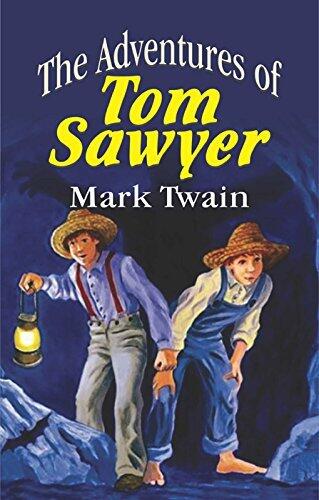
The Adventures of Tom Sawyer: Mark Twain (Samuel Clemens)'s Childhood Adventures
Description
Through Tom's eyes, readers experience the joys and challenges of growing up, from the innocence of play to the complexities of friendship and morality. The vibrant characters, including the clever and feisty Becky Thatcher, paint a rich tapestry of youthful exuberance and curiosity.
Twain's masterful storytelling captures the essence of childhood—balancing fun with the inevitability of growing up. The narrative resonates with timeless truths and nostalgic charm, making this tale enduring and relatable across generations.
Reviews

I read this book for the first time some six or seven years ago. I was then quite a stranger to the American literary traditions, and had, accordingly, failed to grasp its true depth. Many details, I found afterwards, were lost to me in that first experience even though I had enjoyed it. Last week, I took the book for a second reading, and it hardly lasted me three days. I was quite astonished at the change which five years of academic training in the field of Anglo-Saxon literature, and two more of personal research could do. Though the dim outline of the novel was still present in my memory, every passage I read dawned upon me in a completely different light. Being a work written for both children and adults, the book is very easy to read, but far from flat or shallow. Within its pages, Twain had mastered the art of symbolism, metaphor, and a somewhat sarcastic discourse highly critical of the values of the south. One excellent illustration of its complexity can be found in the chapters relating the three days spent by Tom and Becky Thatcher in the cave. When the pair had lost their way, and could by no means find their party, Tom urged his companion to move in any direction whatsoever in a symbolic representation of human existence. To move forward in life, even towards the unknown, is still regarded as progress and far better than to stand still, vulnerable, and helpless. Besides its symbolic traits, the novel also refers openly to a set of topics such as education and religion. The former is depicted as extremely rigid, and even destructive to the creativity of children. Faith and religion, on the other hand, are touched upon with a tinge of irony which questions their whole foundation and sincerity, especially in regard to social injustice and the value given to money and wealth. Although Tom Sawyer is the central and eponymous hero of the novel, the book gives much importance to Huckleberry Finn, and prepares the reader to a second work centered around his character. The most influential theme in regard to Huck Finn is arguably abandonment. Being deserted by his mother, abandoned and abused by his father, the boy grew up as an outcast, and faced, therefore, all the psychological and social trials of his situation.

I was interested in the beginning but the more I read the more boring it got.
Reading Log
No reading logs found
Start tracking your reading progress to see logs here
Add Your First Reading LogNotes
Transaction Log
No transaction logs found
Start tracking your book transactions to see logs here
Add Your First Transaction Log