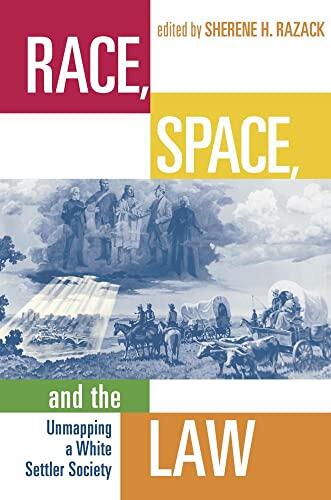
Description
In the realm of welfare economics, Kenneth Arrow's groundbreaking impossibility theorem stands as a pivotal moment, reshaping the way economists understand collective decision-making. The work, highlighted in this insightful volume, delves into the complexities and implications of Arrow's findings, which assert that no voting system can perfectly reflect the preferences of individuals while satisfying a set of reasonable criteria. By unraveling the theorem's nuances, the authors shed light on the intricate interplay between democracy and economic theory.
Amartya Sen and Eric Maskin, both esteemed economists, bring their unique perspectives to the discussion, bridging theoretical insights with practical implications. Through a thorough exploration of Arrow's theorem, they analyze its repercussions on policy formulation and societal welfare, prompting readers to reconsider established notions of fairness and efficiency in democratic processes. This engaging examination resonates deeply in contemporary debates about governance and economic justice, inviting both scholars and laypersons to reflect on the challenges inherent in collective choice.
Amartya Sen and Eric Maskin, both esteemed economists, bring their unique perspectives to the discussion, bridging theoretical insights with practical implications. Through a thorough exploration of Arrow's theorem, they analyze its repercussions on policy formulation and societal welfare, prompting readers to reconsider established notions of fairness and efficiency in democratic processes. This engaging examination resonates deeply in contemporary debates about governance and economic justice, inviting both scholars and laypersons to reflect on the challenges inherent in collective choice.
Book Details
Format
Hardcover
Pages
168 pages
Language
English
Published
Jan 1, 2014
Publisher
Columbia University Press
Editions
2 editions
ISBN-10
0231153287
ISBN-13
9780231153287