

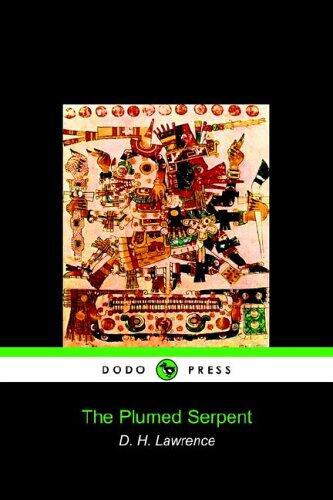
Description
The characters grapple with their sexuality and the societal norms that bind them, inviting a heartfelt exploration of the human experience. With each twist and turn, Lawrence pushes boundaries, urging the audience to confront their own beliefs and perceptions.
This thought-provoking journey resonates with readers, as it challenges them to consider the fluidity of identity and the power of cultural exchange. Through beautifully crafted prose, Lawrence masterfully weaves a tale that is both provocative and tender, leaving an indelible mark on those who dare to turn the pages.
Book Details
Genres
Reviews
View All
Often referred to as Lawrence's American novel, this book amounts to a perfect Lawrencian hell in its depiction of life whether in connection with religion, politics, or the existential and psychological states of its characters. At the same time, it offers a rich and diverse study of the modernist culture, politics, the psychology of religion, alienation, class estrangement, the fear of death, and many other topics.A great part of the novel deals with existential and psychological anxieties such as the fear of death and the meaninglessness of life. Kate Leslie, the widow of an Irish patriot and the central character of the book, is prompted by a feeling of restlessness, caused by her arrival to the threshold of middle age, to travel to Mexico and lose herself in what seems to her a "mysterious vitality of a mysterious race".Even during her sojourn in Mexico, the fear of death and the meaninglessness of life continued to oppress her in the guise of an antipathy formed towards the passiveness with which the native people lived their lives. The people's custom to live from day to day with no care for the future frustrated her already troubled psychology, which at forty had deemed every hour of every day way too precious to be lost in aimless wandering.Religion is another pillar in regard to the plot, for it serves two causes in the novel. The first is its universal role of shielding the human psychological foundation against the overwhelming influence of death and a life spent in meaningless suffering. In this capacity, Kate seeks the comfort of a religious belief and accepts the office of Malintzi (The goddess of fertility in the creed of Quetzalcoatl). The second role is political, for it transforms religion into a means to control people in accordance with Friedrich Nietzsche's views on how is morality the best way to lead Mankind by the nose.In this manner, the novel emphasizes the role of religious and political movements in annihilating the individual, and burry his will in the midst of the masses, which leads to the widespread of herd morality.When it comes to social phenomenon, the novel analyses alienation between classes and races. At the bullfight, people from different backgrounds could not enjoy the spectacle in the same way. While some had looked upon it as a virile exciting exercise, other only regarded it as a debasing form of entertainment.The concept of otherness accompanies that of alienation through the struggle between the native Mexicans and the upper class of English and American subjects staying in Mexico.In connection with Modernism, the use of mythology and the god-figure of Quetzalcoatl serves as a prototype of the rebirth which Lawrence found necessary in a degenerate modernist atmosphere.