

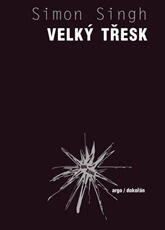
Description
Kniha elegantně kombinujte historii, vědecké novinky a osobní příběhy, které ilustrují cestu k pochopení velkého třesku od prvních hypotéz až po současné výzkumy. Čtenář má šanci nahlédnout do myslí slavných vědců, kteří se snažili odhalit tajemství vzniku vesmíru, a zjistit, jak jejich práce ovlivnila náš pohled na realitu.
Srozumitelně napsaná a bohatě ilustrovaná kniha přibližuje nejen složité teorii, ale také emocionální rozměr lidstva při snaze porozumět vesmíru. Čtenářům tak zanechá silný pocit úžasu a zvědavosti, zatímco se budou snažit pochopit, jak vnímají místo člověka v nekonečném vesmíru.
Book Details
Genres
Reviews
View All
Simon Singh is a science writer and journalist. For several years, he worked at the BBC as a television producer making documentaries.
Big Bang: The Origin of the Universe, published in November 2004, is a book by Simon Singh. In the literary field, many writers or poets compose a work by considering two or more stories and, in parallel, derive their narrative from a synthesis of them. Simon Singh did the same with his book: the journalist, starting from the premise that there is something unique about the Big Bang theory, investigated what the creation of the world would have been with the most rigorous scientific approach. In this essay, he dedicated himself to the search for the men who revealed the mysterious origin of the universe and summarized the journey in an emblematic way through two equidistant narratives: “These stories, taken into consideration by Simon Singh, although in harmony with each other, intertwine with considerable significance. And if on the one hand they clarify already acquired convictions, on the other, they leave open the questions of the past.”
The first narrative, which spans billions of years, is the one born from an explosion. Considering every dissertation on the origin of the universe and those who wrote its history starting from the first cosmological scheme of the last century, the author was inspired by Albert Einstein's theory of relativity. In other words, starting from a pragmatic synthesis, it was concluded that the universe was born from a "great explosion" known as the Big Bang. [...] In reference to the second story, while maintaining the scientific representation with which the authors describe creation, the timescales are much shorter; however, it addresses a more complex theme, the purpose of which generated considerable discussion. From this second example of the universe, a new scenario opened up, because there were those who believed that the cosmos never had a beginning and much less could come to an end, which suggested that, in addition to being immortal, it was also immutable over time.
Of these two systems of the universe on which the science journalist based himself over the years, the only real controversy concerned telescopes, because year after year they have been perfected, becoming increasingly powerful and precise: “These cutting-edge work tools, in addition to deepening the theoretical analyses discovered by chance, revealed a fossil trace dating back to the primordial explosion.” Therefore, over time, the accumulation of data that telescopes continued to record showed modern science that, between the two models of the universe considered for the creation of the world, the "Big Bang" might be the most credible.
That the universe was born from an explosion and that the expansion of the cosmos it generated gave rise to the formation of galaxies and stars remains a thesis adopted today by scientists, astronomers, and cosmologists. Simon Singh, summarizing the encyclopedias that report the theory of relativity, recalled great scientists like Stephen Hawking. He shed light on people who were the direct protagonists of the universe, because they themselves, going back to the origin, revealed its mystery. For example: Fred Hoyle, who gave the name to the model of the universe that lasts billions of years and who, moreover, became an inflexible opponent of the Big Bang doctrine; he then evoked the fame of two people who, in relation to Albert Einstein's relativity, were instrumental in examining his equations to extract the most well-known model, namely Alexander Friedmann, a Soviet meteorologist, and Georges Lemaître, a Belgian mathematician and priest.
Furthermore, in summarizing this exciting event, Simon wrote the book observing it from a personal perspective: the journalist immersed himself in historical and scientific facts with the same curiosity and desire to know that readers perceive. With great frankness, he retraced the genius of the people who deciphered the mysteries of the Big Bang. The book is enhanced by interrelated illustrations that explain the assumptions and possible intellectual representations capable of synthesizing a series of knowledge that could be projected on a large scale. Singh, in recounting the Big Bang, emphasized the experiments with which the theory of the origin of the universe was definitively constructed. And the initial phase of a 13.7 billion-year history managed to be unusually explicit and easy to understand.