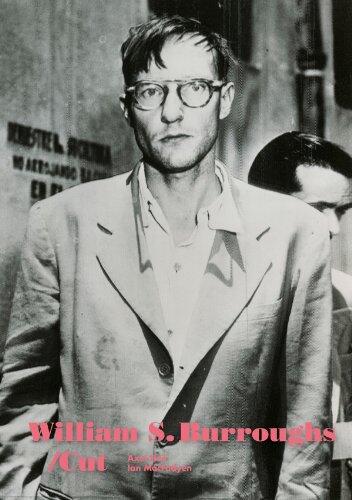
Description
Ian MacFadyen delves into the revolutionary world of William S. Burroughs, exploring the multifaceted layers of his work and legacy. The narrative invites readers into Burroughs' unconventional mind, where the boundaries of literature, art, and society blur. MacFadyen analyzes Burroughs' experimental style, underscoring how it reshaped the landscape of modern literature and continues to resonate in contemporary culture.
Throughout the exploration, there is a substantial emphasis on Burroughs' unique narrative techniques, particularly his non-linear storytelling and the use of cut-up methods. MacFadyen carefully examines these elements to illustrate Burroughs' critique of conventional narratives and how such ruptures reflect the chaotic nature of reality itself. Readers gain insight into how Burroughs’ approach not only challenged literary norms but also offered profound commentary on the human experience.
As the analysis unfolds, MacFadyen situates Burroughs’ work within a broader cultural context, highlighting its enduring relevance. By weaving together biographical details, literary criticism, and cultural critique, this examination serves as a compelling ode to an artist who forever altered the trajectory of literature, making a strong case for Burroughs’ vital role in understanding both the past and future of creative expression.
Throughout the exploration, there is a substantial emphasis on Burroughs' unique narrative techniques, particularly his non-linear storytelling and the use of cut-up methods. MacFadyen carefully examines these elements to illustrate Burroughs' critique of conventional narratives and how such ruptures reflect the chaotic nature of reality itself. Readers gain insight into how Burroughs’ approach not only challenged literary norms but also offered profound commentary on the human experience.
As the analysis unfolds, MacFadyen situates Burroughs’ work within a broader cultural context, highlighting its enduring relevance. By weaving together biographical details, literary criticism, and cultural critique, this examination serves as a compelling ode to an artist who forever altered the trajectory of literature, making a strong case for Burroughs’ vital role in understanding both the past and future of creative expression.
Book Details
Format
Paperback
Pages
164 pages
Language
English
Published
Jun 30, 2013
Publisher
Walther König, Köln
ISBN-10
3863352297
ISBN-13
9783863352295