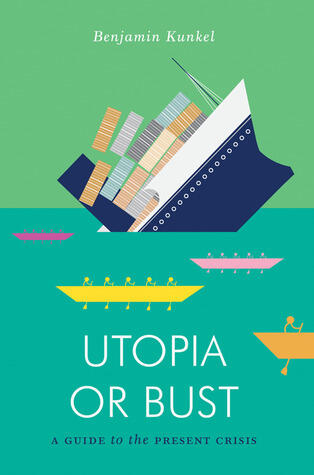
Book Details
Format
Kindle
Pages
194
Language
English
Published
Mar 11, 2014
Publisher
Verso
ISBN-10
178168328X
ISBN-13
9781781683286
Description
In a world grappling with the aftermath of economic turmoil, a thought-provoking exploration emerges that scrutinizes the very fabric of modern society. Benjamin Kunkel delves into the nuances of contemporary struggles, offering a poignant examination of the shifting paradigms of capitalism and the echoing relevance of socialist thought. He presents a compelling narrative that intertwines historical perspective with urgent contemporary issues, beckoning readers to critically assess the status quo.
The book serves as a reflective guide, encouraging individuals to ponder the visions of utopia and the practicality of achieving such ideals in today's climate. Kunkel's insightful prose resonates with those questioning the sustainability of current economic systems while considering alternative models. Interrogating notions of fairness, equity, and community, he emphasizes the necessity for systemic change in light of persistent inequality and environmental crises.
With an accessible yet rigorous approach, Kunkel engages a diverse audience, inviting both skeptics and advocates of socialism alike to reevaluate their understanding of progress and societal welfare. Through meticulously crafted arguments, he challenges readers to envision a future where adaptability and innovation can lead to meaningful transformations.
Ultimately, this work stands as a catalyst for dialogue about the complexities of modern life and the possibilities of restructuring society toward a more inclusive and just framework, making it an indispensable read for anyone invested in the future of socio-economic systems.
The book serves as a reflective guide, encouraging individuals to ponder the visions of utopia and the practicality of achieving such ideals in today's climate. Kunkel's insightful prose resonates with those questioning the sustainability of current economic systems while considering alternative models. Interrogating notions of fairness, equity, and community, he emphasizes the necessity for systemic change in light of persistent inequality and environmental crises.
With an accessible yet rigorous approach, Kunkel engages a diverse audience, inviting both skeptics and advocates of socialism alike to reevaluate their understanding of progress and societal welfare. Through meticulously crafted arguments, he challenges readers to envision a future where adaptability and innovation can lead to meaningful transformations.
Ultimately, this work stands as a catalyst for dialogue about the complexities of modern life and the possibilities of restructuring society toward a more inclusive and just framework, making it an indispensable read for anyone invested in the future of socio-economic systems.
Genres
Dystopian
Science & Technology
History
Business & Economics
Philosophy
Contemporary